
Welcome to
the Professional League
Welcome to
the Professional League
Welcome to
the Professional League
When it comes to sharpness and edge retention, Damascus knives are undoubtedly in a league of their own. The extreme and long-lasting sharpness, as well as the exceptional layers, make the heart of every knife lover beat faster. But even the sharpest blade eventually loses its sharp edge. The fear of ruining your favorite kitchen knives with your own grinding attempts is widespread. We have a solution! We have summarized the special details that need to be considered when sharpening the prestigious Damascus steel blade.
See how bladesmith master Karim Khedira forges Damascus knives in his rustic-looking workshop in Liestal, Switzerland.
When it comes to sharpness and edge retention, Damascus knives are undoubtedly in a league of their own. The extreme and long-lasting sharpness, as well as the exceptional layers, make the heart of every knife lover beat faster. But even the sharpest blade eventually loses its sharp edge. The fear of ruining your favorite kitchen knives with your own grinding attempts is widespread. We have a solution! We have summarized the special details that need to be considered when sharpening the prestigious Damascus steel blade.
See how bladesmith master Karim Khedira forges Damascus knives in his rustic-looking workshop in Liestal, Switzerland.

What is the difference between a modern Damascus knife and a classic chef’s knife?
What is the difference between a modern Damascus knife and a classic chef’s knife?
What is the difference between a modern Damascus knife and a classic chef’s knife?
Japanese Damascus knives are made of high carbon steel, which has a hardness between 60-63 Rockwell rating (HRC). In comparison, our European chef’s knives are between 55-58 HRC. A higher HRC allows your blade to be sharpened with an even finer grit, to reach a better sharpness that will last longer – even with intensive use.
However, due to the high degree of hardness, Damascus blades are also more sensitive and require more maintenance – the more carbon that is in the steel, the more susceptible it is to corrosion (rust). Therefore, high-quality Damascus steel knives should always be well-dried or maintained with appropriate oils.
Japanese Damascus knives are made of high carbon steel, which has a hardness between 60-63 Rockwell rating (HRC). In comparison, our European chef’s knives are between 55-58 HRC. A higher HRC allows your blade to be sharpened with an even finer grit, to reach a better sharpness that will last longer – even with intensive use.
However, due to the high degree of hardness, Damascus blades are also more sensitive and require more maintenance – the more carbon that is in the steel, the more susceptible it is to corrosion (rust). Therefore, high-quality Damascus steel knives should always be well-dried or maintained with appropriate oils.
What Are the Different Kinds
of Damascus Knives
What Are the Different Kinds
of Damascus Knives
What Are the Different Kinds
of Damascus Knives
Various types of steel are welded from a ”billet“ at temperatures up to 1.200 degrees Celsius while manufacturing Damascus knives. Like puff pastries, the steels are stretched and folded until the desired number of layers is achieved. After further treatment, these layers create the typical Damascus pattern. We distinguish between two types of Damascus blades: the classic or ”wild“ Damascus and the industrial Damascus knives.
Various types of steel are welded from a ”billet“ at temperatures up to 1.200 degrees Celsius while manufacturing Damascus knives. Like puff pastries, the steels are stretched and folded until the desired number of layers is achieved. After further treatment, these layers create the typical Damascus pattern. We distinguish between two types of Damascus blades: the classic or ”wild“ Damascus and the industrial Damascus knives.
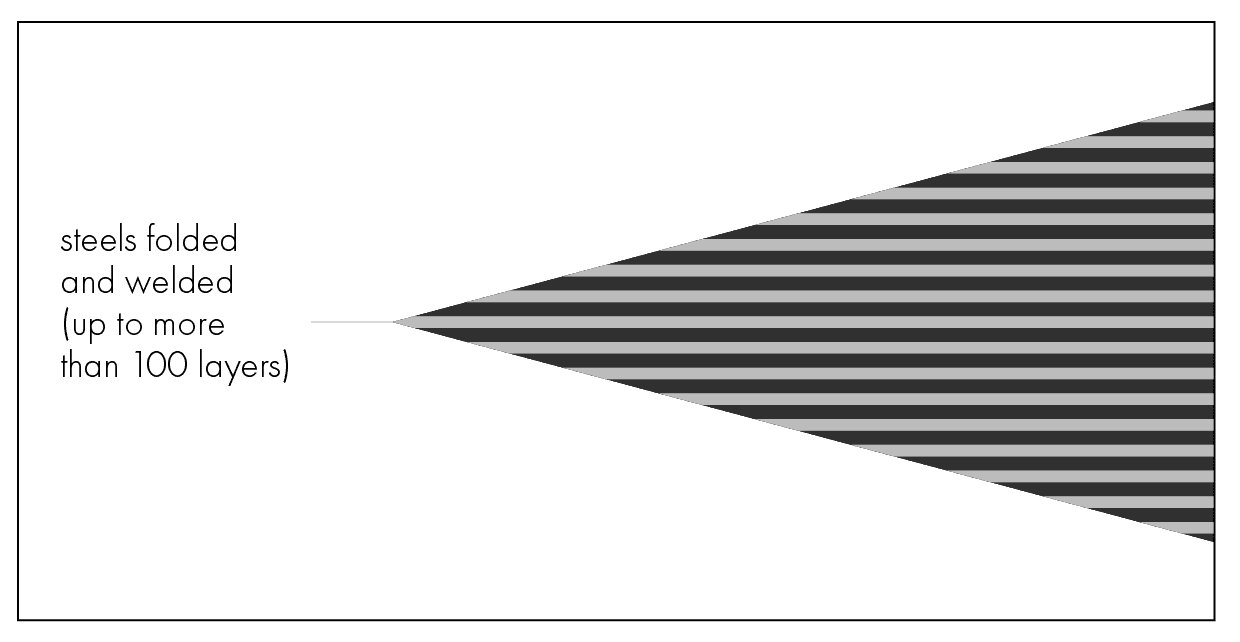
Wild Damascus Knives
Classic or ”wild“ Damascus uses high-quality steels that are exclusively suitable for cutting. The production requires a high degree of manual labor, which is also reflected in the price. A classic Damascus chef knife very quickly reaches 1.000 euros. There are no limits when it comes to the price for passionate knife collectors.
Classic or ”wild“ Damascus uses high-quality steels that are exclusively suitable for cutting. The production requires a high degree of manual labor, which is also reflected in the price. A classic Damascus chef knife very quickly reaches 1.000 euros. There are no limits when it comes to the price for passionate knife collectors.
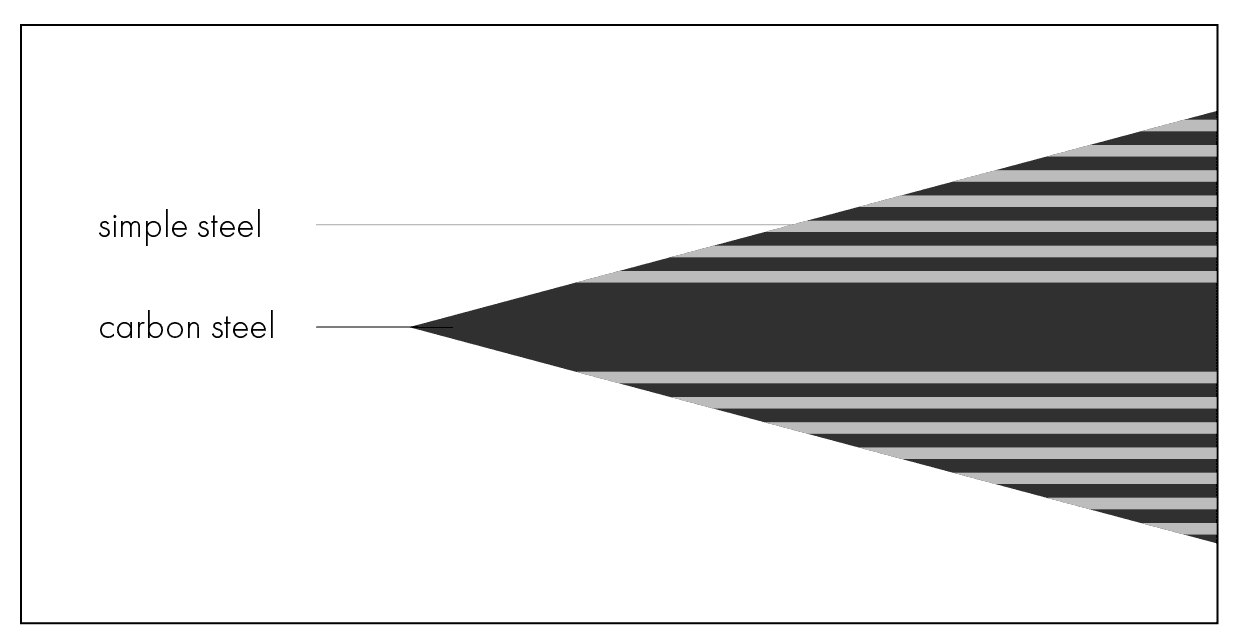
Industrial Damascus Knives
On the other hand, knives made out of industrial Damascus steel are considerably less expensive. Here, only the cutting layer in the middle of the blade is made of qualitative carbon steel, which is surrounded by softer or tougher steel. These softer steels provide the typical Damascus look but are usually not able to slide through cutting materials, as they are too smooth. This is why qualitative carbon steel is used for the cutting edge. Due to the technically more favorable process, good models can be purchased in a price range of 50 to 250 euros.
On the other hand, knives made out of industrial Damascus steel are considerably less expensive. Here, only the cutting layer in the middle of the blade is made of qualitative carbon steel, which is surrounded by softer or tougher steel. These softer steels provide the typical Damascus look but are usually not able to slide through cutting materials, as they are too smooth. This is why qualitative carbon steel is used for the cutting edge. Due to the technically more favorable process, good models can be purchased in a price range of 50 to 250 euros.
How to Sharpen
Damascus Knives Like a Pro
How to Sharpen
Damascus Knives Like a Pro
How to Sharpen
Damascus Knives Like a Pro
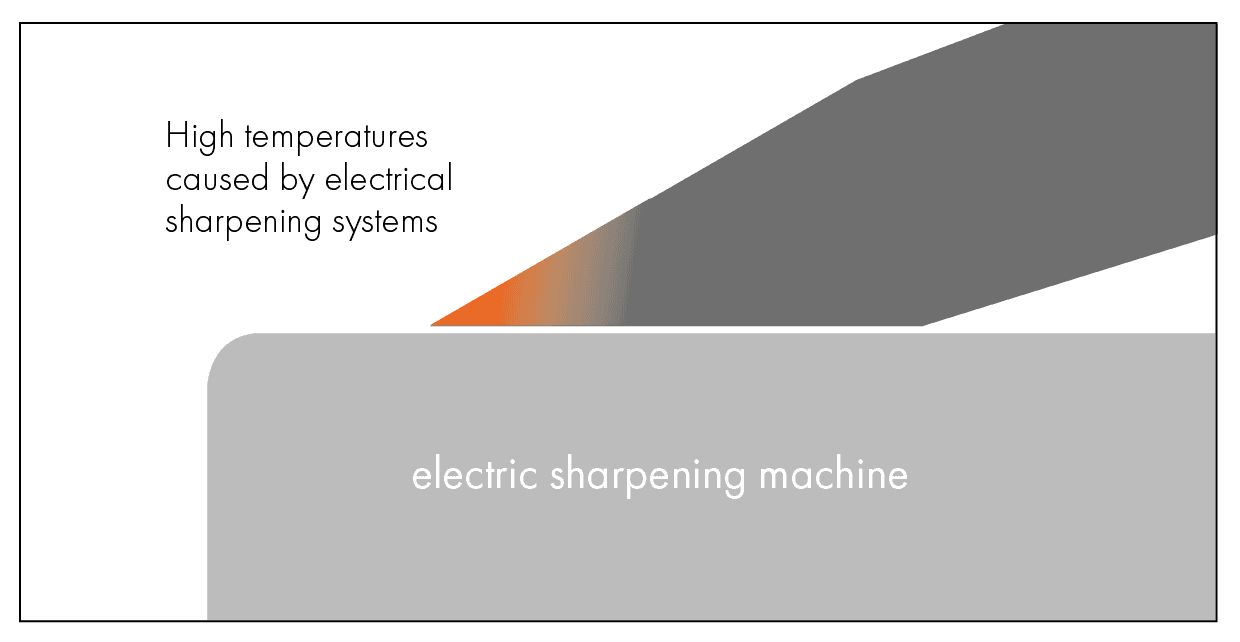
Grinding speed
Grinding speed
Using a mechanical or electric sharpener can quickly generate high temperatures on the blade, resulting in the removal of too many layers, uneven sharpening and damage to the edge of the blade. Excessively high temperatures during the sharpening process will damage the steel permanently – the blade will literally burn. In addition, more material is removed than actually necessary. A high degree of experience is required here, and, above all, attention should be paid to cooling the cutting edge while sharpening. For this reason, professionals usually recommend using a manual knife sharpener like a whetstone for high-quality Damascus knives.
Using a mechanical or electric sharpener can quickly generate high temperatures on the blade, resulting in the removal of too many layers, uneven sharpening and damage to the edge of the blade. Excessively high temperatures during the sharpening process will damage the steel permanently – the blade will literally burn. In addition, more material is removed than actually necessary. A high degree of experience is required here, and, above all, attention should be paid to cooling the cutting edge while sharpening. For this reason, professionals usually recommend using a manual knife sharpener like a whetstone for high-quality Damascus knives.
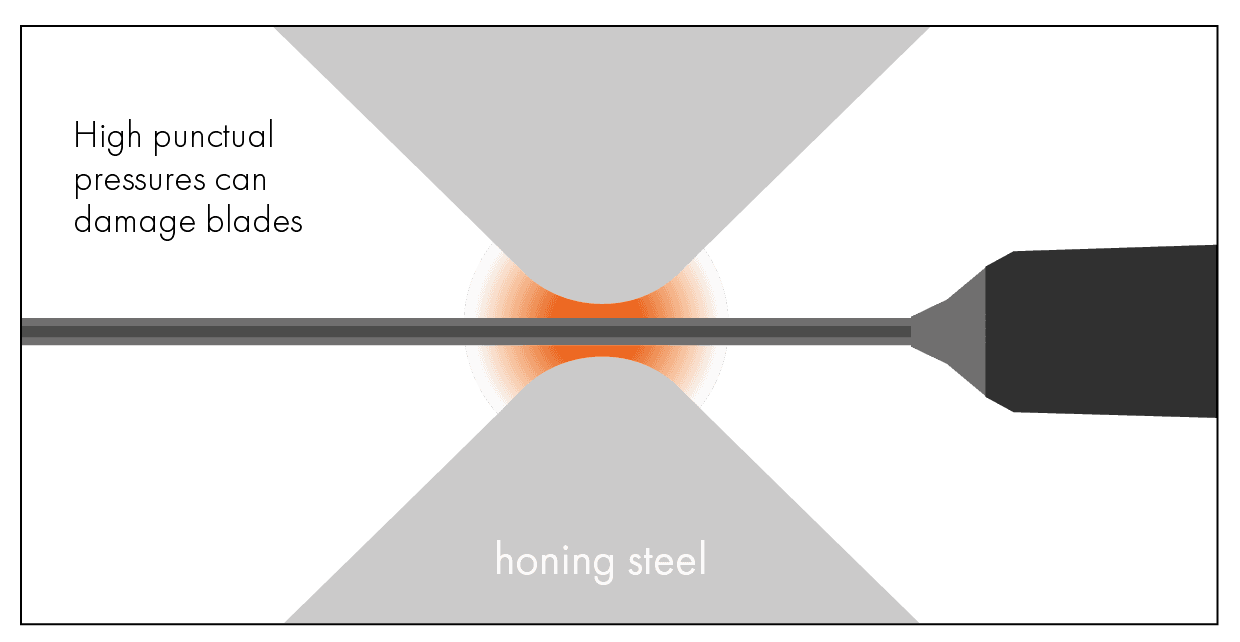
Uniform pressure
Uniform pressure
Due to their high degree of rigidity compared to other types of kitchen knives, Damascus knives react sensitively to punctual pressure, such as with classic pull-through sharpeners or honing steels. Therefore, it is important to grind the edge of your blade as evenly as possible to avoid nicks and chippings in your precious knives.
Due to their high degree of rigidity compared to other types of kitchen knives, Damascus knives react sensitively to punctual pressure, such as with classic pull-through sharpeners or honing steels. Therefore, it is important to grind the edge of your blade as evenly as possible to avoid nicks and chippings in your precious knives.
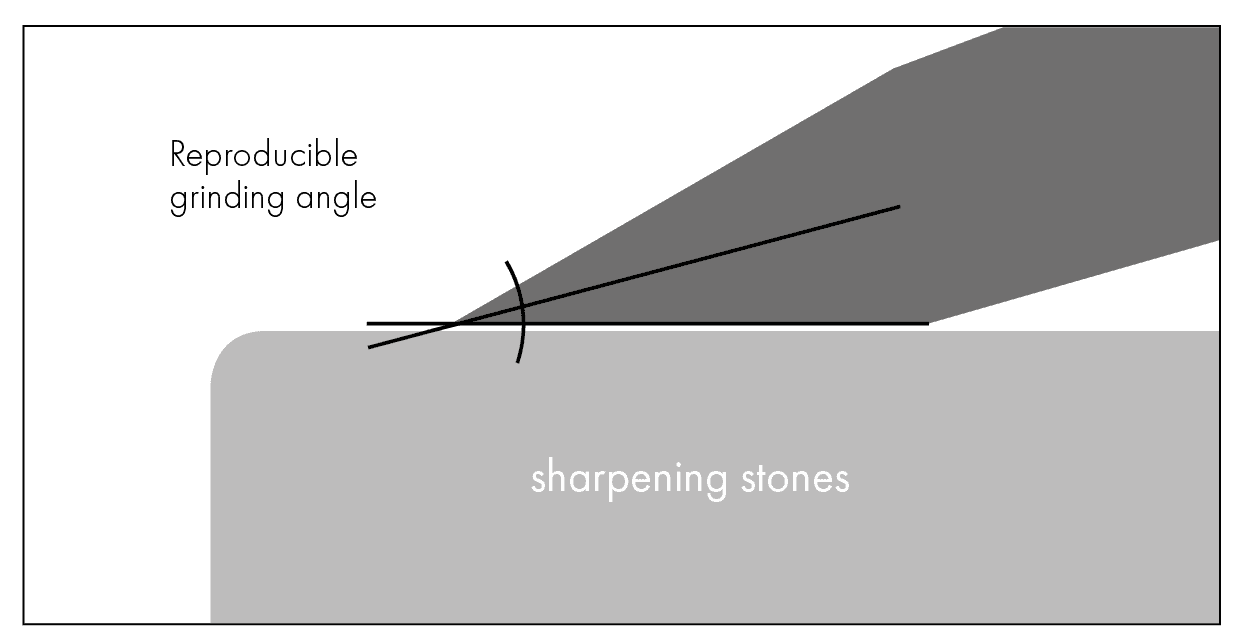
Reproducible angle
Reproducible angle
The decisive factor in taking care of the most precious blades is to maintain a constant grinding angle on each side of the blade and reproduce it exactly during future sharpenings. This is not an easy task while using sharpening stones freehand, and it requires a certain amount of practice and time. A reproducible grinding angle ensures a fast result with minimum material removed to ensure the longevity of your kitchen knife.
The decisive factor in taking care of the most precious blades is to maintain a constant grinding angle on each side of the blade and reproduce it exactly during future sharpenings. This is not an easy task while using sharpening stones freehand, and it requires a certain amount of practice and time. A reproducible grinding angle ensures a fast result with minimum material removed to ensure the longevity of your kitchen knife.
Which grit is the right one?
Which grit is the right one?
A conversation about sharpening knives always leads to a discussion of the grit used and the final results on the blades.
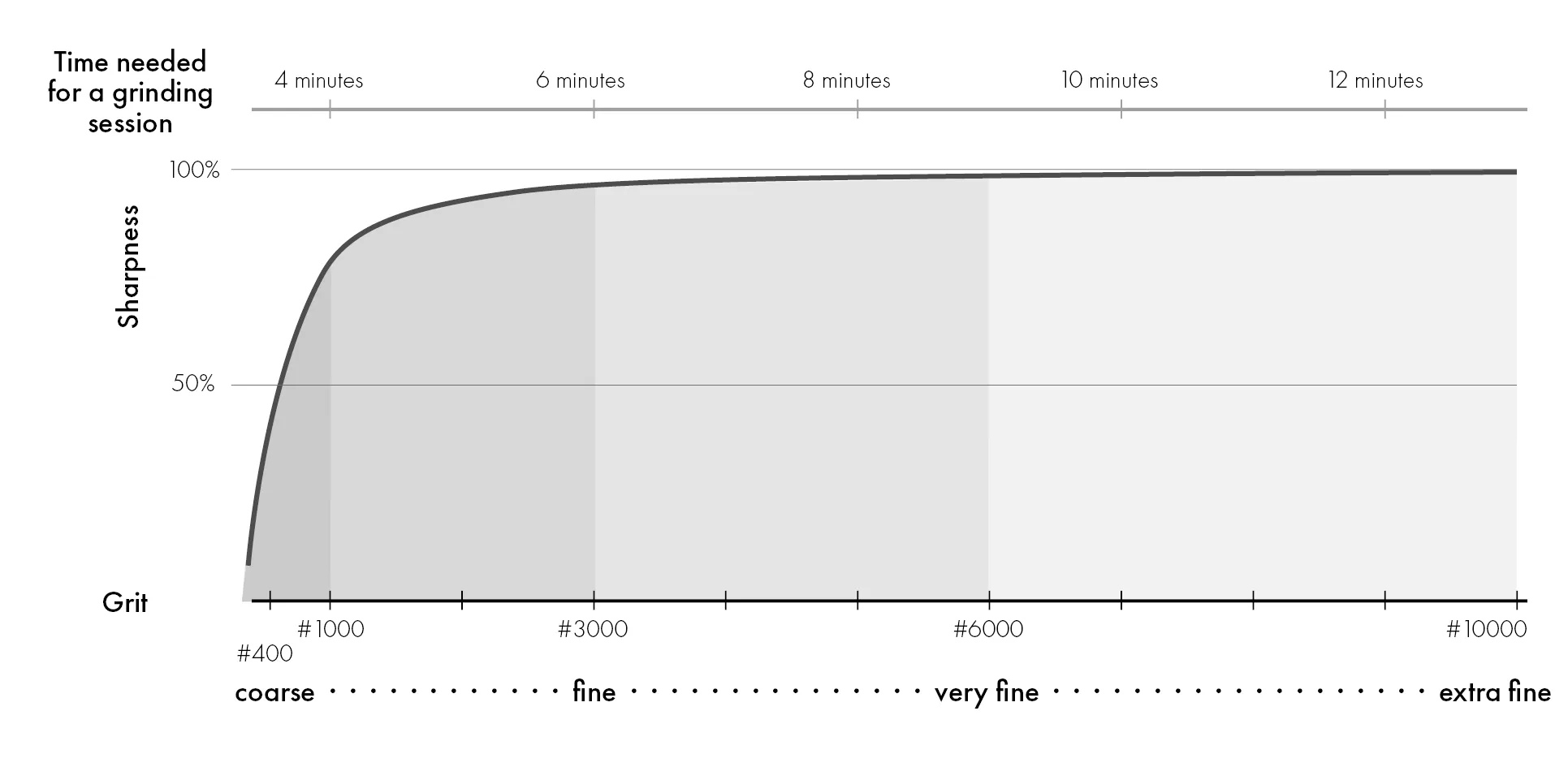
In most cases, the grits of whetstones are specified according to the Japanese Industrial Standard (JIS). Countless variations from very coarse grits starting at #400 to the finer grits of #10.000 are currently available on the market. Some are natural stones, others are industrially produced corundum or ceramic stones up to diamond surfaces. However, across all of the options, the principle is the same – material removal.
Basically, the finer the grit you use during the regular sharpening of your blade, the sharper the cutting experience will be. We have simplified the time/effort ratio of the result after countless tests.
A conversation about sharpening knives always leads to a discussion of the grit used and the final results on the blades.
In most cases, the grits of whetstones are specified according to the Japanese Industrial Standard (JIS). Countless variations from very coarse grits starting at #400 to the finer grits of #10.000 are currently available on the market. Some are natural stones, others are industrially produced corundum or ceramic stones up to diamond surfaces. However, across all of the options, the principle is the same – material removal.
Basically, the finer the grit you use during the regular sharpening of your blade, the sharper the cutting experience will be. We have simplified the time/effort ratio of the result after countless tests.
Finishing Touches
Finishing Touches
In order to achieve the best sharpening results and to avoid any damage to your blade, it is essential to avoid building up excessive heat on the cutting edge. Due to the high carbon content, Damascus knives are very hard, but they are also sensitive and require appropriate care. In order to sharpen a Damascus knife in a short time and with little material loss, a constant grinding angle is crucial. The choice of grit can be self-determined, from useful daily utilisation to professional sharpness.
In order to achieve the best sharpening results and to avoid any damage to your blade, it is essential to avoid building up excessive heat on the cutting edge. Due to the high carbon content, Damascus knives are very hard, but they are also sensitive and require appropriate care. In order to sharpen a Damascus knife in a short time and with little material loss, a constant grinding angle is crucial. The choice of grit can be self-determined, from useful daily utilisation to professional sharpness.
Best Tools For Sharpening
Damascus Knives
Best Tools For Sharpening
Damascus Knives
Best Tools For Sharpening
Damascus Knives
If you’ve invested in true Damascus steel, you’ll want to keep it in tip-top shape with the right tools. Here’s what you’ll need to maintain a sharp edge for years to come:
Whetstones: Use up to 1,000 grit for grinding, up to 5,000 for refining, and 10,000+ for a mirror polish. The HORL sharpening discs follow this progression.
Honing: Using honing discs or rods realigns the edge between sharpening sessions.
Leather Strop: Removes any grinding residue to ensure a smooth, clean finish.
Magnetic Angle Support: Maintaining a constant angle is the most important factor in sharpening. As a core part of the HORL® Method, the magnetic support fixes the blade at a precise angle, ensuring a uniform grind without the difficulty of freehand sharpening..
Proper Cutting Board: Wood, and especially end-grain, helps preserve the blade's edge.
Still not exactly sure how to sharpen a knife? Get tips, tricks, and step-by-step instructions for maintaining a sharp knife with HORL®.
If you’ve invested in true Damascus steel, you’ll want to keep it in tip-top shape with the right tools. Here’s what you’ll need to maintain a sharp edge for years to come:
Whetstones: Use up to 1,000 grit for grinding, up to 5,000 for refining, and 10,000+ for a mirror polish. The HORL sharpening discs follow this progression.
Honing: Using honing discs or rods realigns the edge between sharpening sessions.
Leather Strop: Removes any grinding residue to ensure a smooth, clean finish.
Magnetic Angle Support: Maintaining a constant angle is the most important factor in sharpening. As a core part of the HORL® Method, the magnetic support fixes the blade at a precise angle, ensuring a uniform grind without the difficulty of freehand sharpening..
Proper Cutting Board: Wood, and especially end-grain, helps preserve the blade's edge.
Still not exactly sure how to sharpen a knife? Get tips, tricks, and step-by-step instructions for maintaining a sharp knife with HORL®.
Mistakes to Avoid When
Sharpening a Damascus Knives
Mistakes to Avoid When
Sharpening a Damascus Knives
Mistakes to Avoid When
Sharpening a Damascus Knives
Sharpening a Damascus knife is an art that requires precision and the right tools. Avoid these common mistakes to save your blade:
Wrong Tools: Avoid pull-through sharpeners. Instead, use a honing steel, leather strop or whetstone for a consistent bevel.
Too Much Pressure: Damascus steel is fragile. Excessive force can chip the blade and wear down its unique patterns.
Overheating the Blade: Electric sharpeners and oil stones generate too much heat and weaken the steel’s temper.
Inconsistent Angle: A steady angle is key to an even edge. Use a magnetic angle guide for precision.
Skipping Honing: Hone your Damascus blade with a honing disc or rod regularly to reduce sharpening frequency and keep your knife razor-sharp.
Wrong Cutting Board: Glass and stone dull blades fast. Use a wooden or end-grain cutting board.
Incorrect Grit: Always choose the grit based on the knife’s condition. Coarse grits are for initial sharpening or repairs, while medium grits (1,000+) are for regular maintenance. Finish with finer grits to achieve a refined edge.
Sharpening a Damascus knife is an art that requires precision and the right tools. Avoid these common mistakes to save your blade:
Wrong Tools: Avoid pull-through sharpeners. Instead, use a honing steel, leather strop or whetstone for a consistent bevel.
Too Much Pressure: Damascus steel is fragile. Excessive force can chip the blade and wear down its unique patterns.
Overheating the Blade: Electric sharpeners and oil stones generate too much heat and weaken the steel’s temper.
Inconsistent Angle: A steady angle is key to an even edge. Use a magnetic angle guide for precision.
Skipping Honing: Hone your Damascus blade with a honing disc or rod regularly to reduce sharpening frequency and keep your knife razor-sharp.
Wrong Cutting Board: Glass and stone dull blades fast. Use a wooden or end-grain cutting board.
Incorrect Grit: Always choose the grit based on the knife’s condition. Coarse grits are for initial sharpening or repairs, while medium grits (1,000+) are for regular maintenance. Finish with finer grits to achieve a refined edge.
The HORL® Sharpener
The HORL® Sharpener
The HORL® Sharpener
The HORL® Method provides a simple and effective alternative to traditional sharpening approaches. The angle support magnetically holds your knife in place for the rotating discs and allows for precise professional-level results on even the most delicate Damascus blades:
The Magnetic Angle Support: Fixing the knife at a constant angle ensures that the sharpening process is perfectly reproducible every time.
Uniform Edge: The rolling movement of the grinding discs creates a perfectly even finish along the entire length of the blade.
Preservation of Steel: Maintaining a precise angle minimizes material abrasion, significantly extending the lifespan of the knife.
The HORL® Method provides a simple and effective alternative to traditional sharpening approaches. The angle support magnetically holds your knife in place for the rotating discs and allows for precise professional-level results on even the most delicate Damascus blades:
The Magnetic Angle Support: Fixing the knife at a constant angle ensures that the sharpening process is perfectly reproducible every time.
Uniform Edge: The rolling movement of the grinding discs creates a perfectly even finish along the entire length of the blade.
Preservation of Steel: Maintaining a precise angle minimizes material abrasion, significantly extending the lifespan of the knife.
About Us
About Us
About Us
HORL is specialized in premium sharpening for knives and scissors. In 2016, we developed the first rolling knife sharpener. We are a Germany-based family business that is now represented worldwide with our stylish, regionally manufactured products. HORL stands for innovations that bring a lifetime of joy. The HORL range is available online at www.horl.com and via selected retail partners, both online and at the POS.
HORL is specialized in premium sharpening for knives and scissors. In 2016, we developed the first rolling knife sharpener. We are a Germany-based family business that is now represented worldwide with our stylish, regionally manufactured products. HORL stands for innovations that bring a lifetime of joy. The HORL range is available online at www.horl.com and via selected retail partners, both online and at the POS.
Read More
Le classique à la perfection
Le classique à la perfection
Le classique à la perfection
Whether you're just starting to explore the world of sharpness or demand the very best from your blades—the different HORL3 models offer you all the options you need.