Choosing the Best Knife Angle
for Your Kitchen Knives
Choosing the Best Knife Angle
for Your Kitchen Knives
Choosing the Best Knife Angle
for Your Kitchen Knives
When it comes to the king of razor-sharp blades, there’s no question that Damascus knives are in a league of their own. The extreme and long-lasting sharpness, as well as the exceptional layers, make the heart of every knife lover beat faster. But even the sharpest blade eventually loses its sharp edge. The fear of ruining your favorite kitchen knives with your own grinding attempts is widespread. We have a solution! We have summarized the special details that need to be considered when sharpening the prestigious Damascus steel blade.
See how bladesmith master Karim Khedira forges Damascus knives in his rustic-looking workshop in Liestal, Switzerland.
When it comes to the king of razor-sharp blades, there’s no question that Damascus knives are in a league of their own. The extreme and long-lasting sharpness, as well as the exceptional layers, make the heart of every knife lover beat faster. But even the sharpest blade eventually loses its sharp edge. The fear of ruining your favorite kitchen knives with your own grinding attempts is widespread. We have a solution! We have summarized the special details that need to be considered when sharpening the prestigious Damascus steel blade.
See how bladesmith master Karim Khedira forges Damascus knives in his rustic-looking workshop in Liestal, Switzerland.

What is the difference between a modern Damascus knife and a classic chef’s knife?
What is the difference between a modern Damascus knife and a classic chef’s knife?
What is the difference between a modern Damascus knife and a classic chef’s knife?
Japanese Damascus knives are made of high carbon steel, which has a hardness between 60-63 Rockwell rating (HRC). In comparison, our European chef’s knives are between 55-58 HRC. A higher HRC allows your blade to be sharpened with an even finer grit, to reach a better sharpness that will last longer – even with intensive use.
However, due to the high degree of hardness, Damascus blades are also more sensitive and require more maintenance – the more carbon that is in the steel, the more susceptible it is to corrosion (rust). Therefore, high-quality Damascus steel knives should always be well-dried or maintained with appropriate oils.
Japanese Damascus knives are made of high carbon steel, which has a hardness between 60-63 Rockwell rating (HRC). In comparison, our European chef’s knives are between 55-58 HRC. A higher HRC allows your blade to be sharpened with an even finer grit, to reach a better sharpness that will last longer – even with intensive use.
However, due to the high degree of hardness, Damascus blades are also more sensitive and require more maintenance – the more carbon that is in the steel, the more susceptible it is to corrosion (rust). Therefore, high-quality Damascus steel knives should always be well-dried or maintained with appropriate oils.
What Are the Different Kinds
of Damascus Knives
What Are the Different Kinds
of Damascus Knives
What Are the Different Kinds
of Damascus Knives
Various types of steel are welded from a ”billet“ at temperatures up to 1.200 degrees Celsius while manufacturing Damascus knives. Like puff pastries, the steels are stretched and folded until the desired number of layers is achieved. After further treatment, these layers create the typical Damascus pattern. We distinguish between two types of Damascus blades: the classic or ”wild“ Damascus and the industrial Damascus knives.
Various types of steel are welded from a ”billet“ at temperatures up to 1.200 degrees Celsius while manufacturing Damascus knives. Like puff pastries, the steels are stretched and folded until the desired number of layers is achieved. After further treatment, these layers create the typical Damascus pattern. We distinguish between two types of Damascus blades: the classic or ”wild“ Damascus and the industrial Damascus knives.
Best Tools For Sharpening
Damascus Knives
Best Tools For Sharpening
Damascus Knives
Best Tools For Sharpening
Damascus Knives
If you’ve invested in true Damascus steel, you’ll want to keep it in tip-top shape with the right tools. Here’s what you’ll need to maintain a sharp edge for years to come:
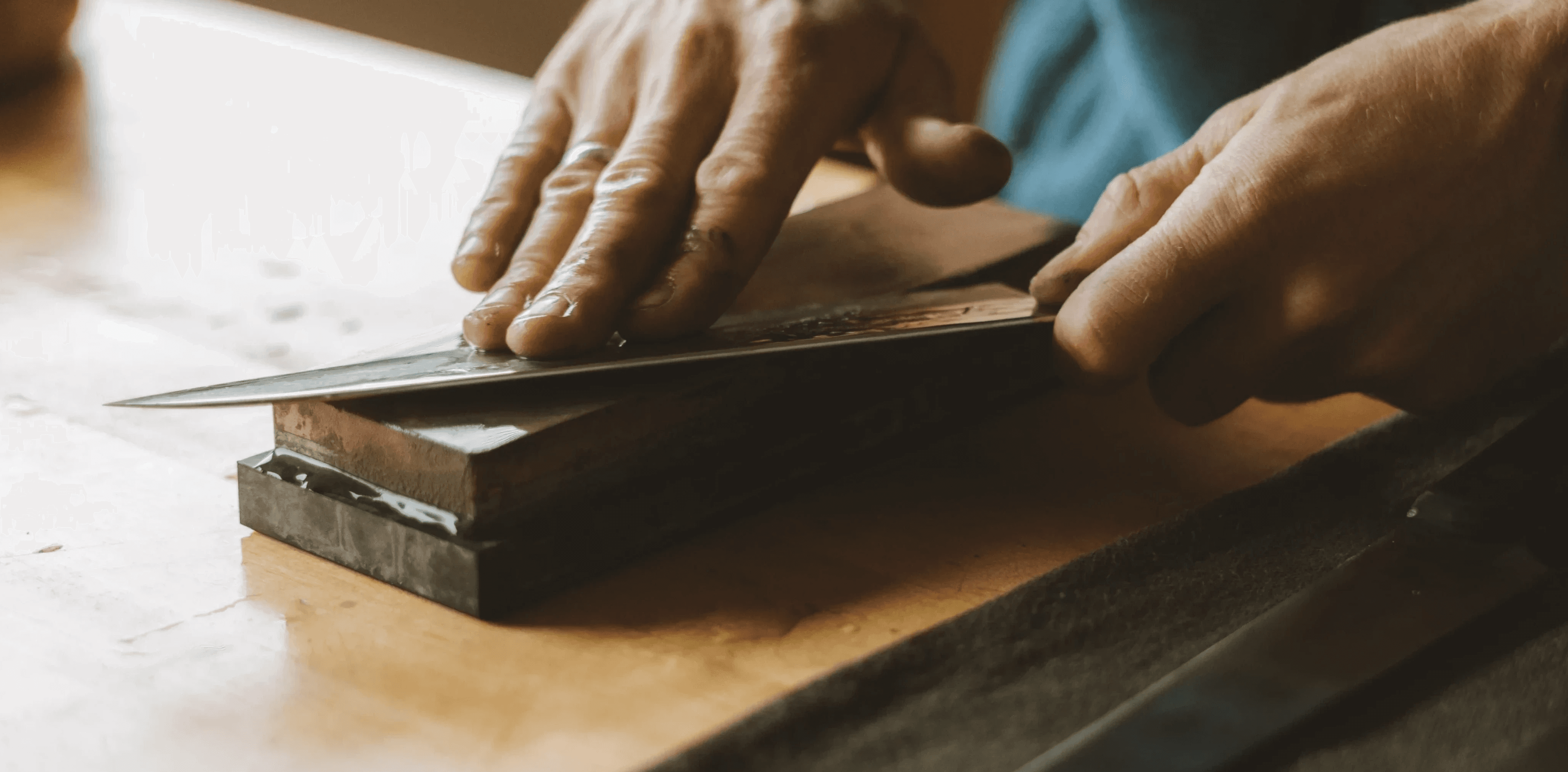
Whetstones: 1000-3000 grit for sharpening, 5000+ for polishing.
Honing Steel: Aligns the edge between sharpening sessions.
Leather Strop: Removes burrs and refines sharpness.
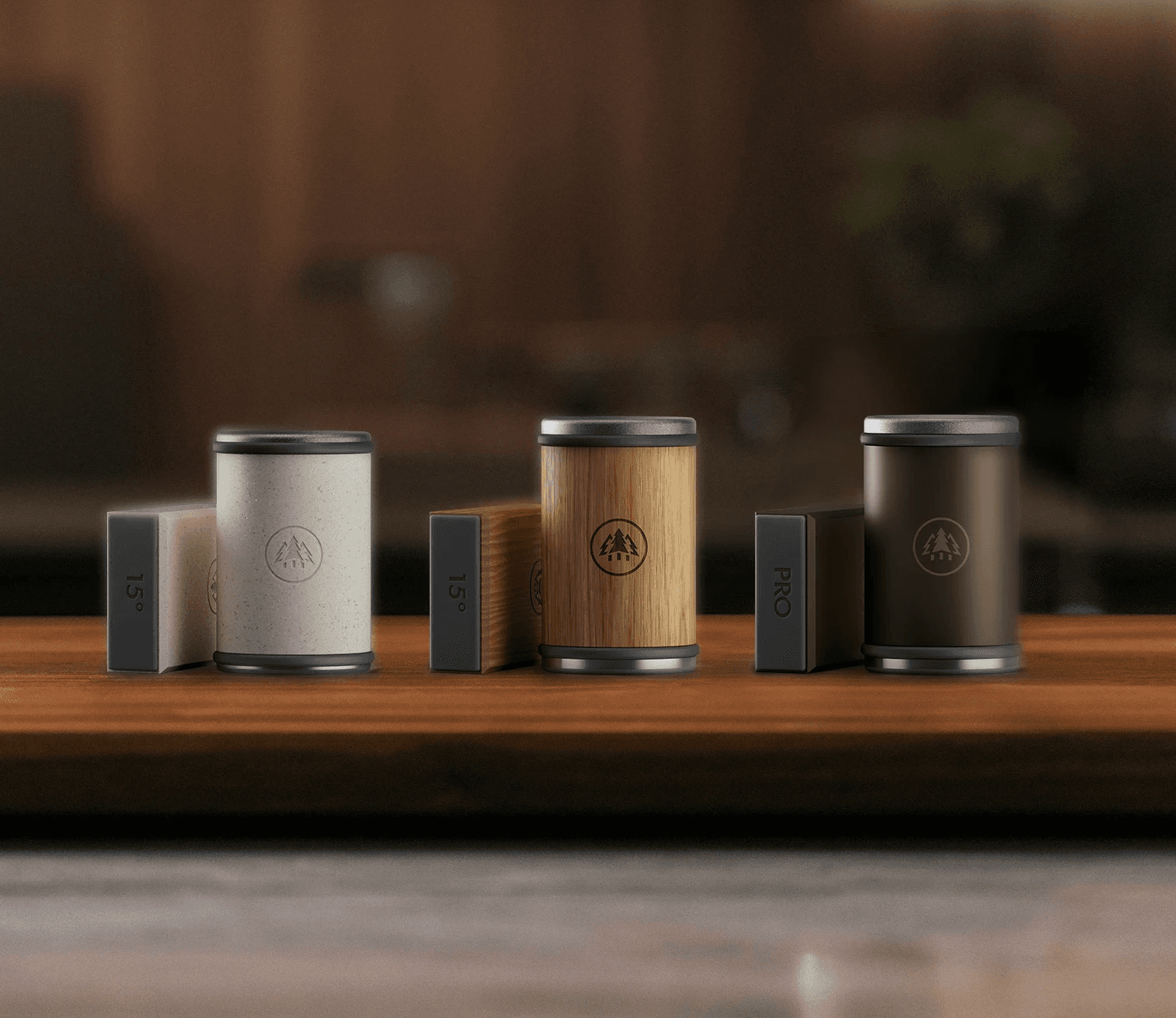
Magnetic Angle Guide: Sharpeners with magnetic angle support like our HORL3 Cruise (and all other HORL ® models) ensures precision sharpening.
Proper Cutting Board: Wood or bamboo preserves the blade edge.
Still not exactly sure how to sharpen a knife? Get tips, tricks, and step-by-step instructions for maintaining a sharp knife with HORL ®.
If you’ve invested in true Damascus steel, you’ll want to keep it in tip-top shape with the right tools. Here’s what you’ll need to maintain a sharp edge for years to come:
Whetstones: 1000-3000 grit for sharpening, 5000+ for polishing.
Honing Steel: Aligns the edge between sharpening sessions.
Leather Strop: Removes burrs and refines sharpness.
Magnetic Angle Guide: Sharpeners with magnetic angle support like our HORL3 Cruise (and all other HORL ® models) ensures precision sharpening.
Proper Cutting Board: Wood or bamboo preserves the blade edge.
Still not exactly sure how to sharpen a knife? Get tips, tricks, and step-by-step instructions for maintaining a sharp knife with HORL ®.
What is the difference between a modern Damascus knife and a classic chef’s knife?
What is the difference between a modern Damascus knife and a classic chef’s knife?
What is the difference between a modern Damascus knife and a classic chef’s knife?
Japanese Damascus knives are made of high carbon steel, which has a hardness between 60-63 Rockwell rating (HRC). In comparison, our European chef’s knives are between 55-58 HRC. A higher HRC allows your blade to be sharpened with an even finer grit, to reach a better sharpness that will last longer – even with intensive use.
However, due to the high degree of hardness, Damascus blades are also more sensitive and require more maintenance – the more carbon that is in the steel, the more susceptible it is to corrosion (rust). Therefore, high-quality Damascus steel knives should always be well-dried or maintained with appropriate oils.
Japanese Damascus knives are made of high carbon steel, which has a hardness between 60-63 Rockwell rating (HRC). In comparison, our European chef’s knives are between 55-58 HRC. A higher HRC allows your blade to be sharpened with an even finer grit, to reach a better sharpness that will last longer – even with intensive use.
However, due to the high degree of hardness, Damascus blades are also more sensitive and require more maintenance – the more carbon that is in the steel, the more susceptible it is to corrosion (rust). Therefore, high-quality Damascus steel knives should always be well-dried or maintained with appropriate oils.
Which grit is the right one?
A conversation about sharpening knives always leads to a discussion of the grit used and the final results on the blades.
In most cases, the grits of whetstones are specified according to the Japanese Industrial Standard (JIS). Countless variations from very coarse grits starting at #400 to the finer grits of #10.000 are currently available on the market. Some are natural stones, others are industrially produced corundum or ceramic stones up to diamond surfaces. However, across all of the options, the principle is the same – material removal.
Basically, the finer the grit you use during the regular sharpening of your blade, the sharper the cutting experience will be. We have simplified the time/effort ratio of the result after countless tests.
A conversation about sharpening knives always leads to a discussion of the grit used and the final results on the blades.
In most cases, the grits of whetstones are specified according to the Japanese Industrial Standard (JIS). Countless variations from very coarse grits starting at #400 to the finer grits of #10.000 are currently available on the market. Some are natural stones, others are industrially produced corundum or ceramic stones up to diamond surfaces. However, across all of the options, the principle is the same – material removal.
Basically, the finer the grit you use during the regular sharpening of your blade, the sharper the cutting experience will be. We have simplified the time/effort ratio of the result after countless tests.
Which grit is the right one?
A conversation about sharpening knives always leads to a discussion of the grit used and the final results on the blades.
In most cases, the grits of whetstones are specified according to the Japanese Industrial Standard (JIS). Countless variations from very coarse grits starting at #400 to the finer grits of #10.000 are currently available on the market. Some are natural stones, others are industrially produced corundum or ceramic stones up to diamond surfaces. However, across all of the options, the principle is the same – material removal.
Basically, the finer the grit you use during the regular sharpening of your blade, the sharper the cutting experience will be. We have simplified the time/effort ratio of the result after countless tests.

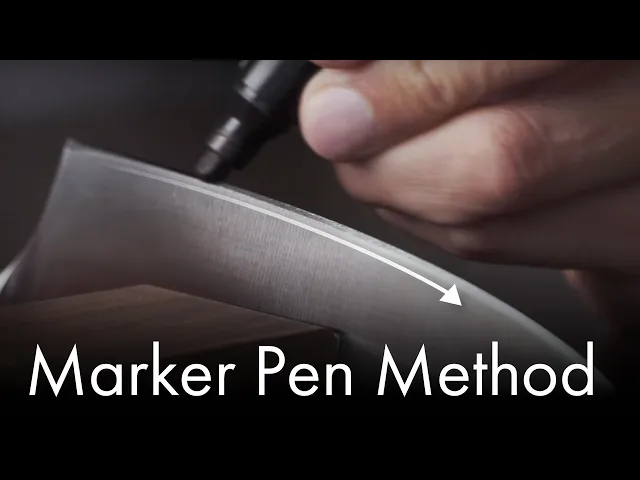
THE MARKER PEN METHOD
Watch the Video
Finishing Touches
In order to achieve the best sharpening results and to avoid any damage to your blade, it is essential to avoid building up excessive heat on the cutting edge. Due to the high carbon content, Damascus knives are very hard, but they are also sensitive and require appropriate care. In order to sharpen a Damascus knife in a short time and with little material loss, a constant grinding angle is crucial. The choice of grit can be self-determined, from useful daily utilisation to professional sharpness.
In order to achieve the best sharpening results and to avoid any damage to your blade, it is essential to avoid building up excessive heat on the cutting edge. Due to the high carbon content, Damascus knives are very hard, but they are also sensitive and require appropriate care. In order to sharpen a Damascus knife in a short time and with little material loss, a constant grinding angle is crucial. The choice of grit can be self-determined, from useful daily utilisation to professional sharpness.

Can I Change the Grinding Angle?
Can I Change the Grinding Angle?
Can I Change the Grinding Angle?
The truth is that with most sharpening methods, the knife’s angle changes slightly each time it’s resharpened. It’s nearly impossible to replicate the exact same angle by hand with 100 % accuracy. In that sense, the answer to whether an angle can be changed is yes — but ideally, it should only happen once. Establishing a consistent, reproducible angle allows for easier resharpening in the future and removes as little material as possible from the blade.
It’s also important to remember that not all steels behave the same. Japanese knives, typically made from harder high‑carbon steels (often above 60 HRC), can support very fine angles without the edge chipping. European chef’s knives, on the other hand, are usually forged from slightly softer but tougher steels (around 55–58 HRC), making them better suited for sturdier, more stable edges. Whenever possible, the manufacturer’s recommendations provide a reliable guideline.
That all said, more important than whether you sharpen at 12°,14°, or 17° is making sure you grind the same angle every time. Consistent sharpening preserves the blade’s geometry, minimizes material removal, and extends the life of the edge, especially with high‑quality knives. Once a knife has been set to a defined sharpening angle, it can be resharpened repeatedly at that same angle to maintain lasting sharpness and durability.
Our Conclusion
Our Conclusion
In order to achieve the best sharpening results and to avoid any damage to your blade, it is essential to avoid building up excessive heat on the cutting edge. Due to the high carbon content, Damascus knives are very hard, but they are also sensitive and require appropriate care. In order to sharpen a Damascus knife in a short time and with little material loss, a constant grinding angle is crucial. The choice of grit can be self-determined, from useful daily utilisation to professional sharpness.
In order to achieve the best sharpening results and to avoid any damage to your blade, it is essential to avoid building up excessive heat on the cutting edge. Due to the high carbon content, Damascus knives are very hard, but they are also sensitive and require appropriate care. In order to sharpen a Damascus knife in a short time and with little material loss, a constant grinding angle is crucial. The choice of grit can be self-determined, from useful daily utilisation to professional sharpness.
About Us
About Us
About Us
We would have never thought that we would find each other professionally after all these years. But when our individual skills found the right common project, amazing things came out. A supposedly simple tool that impresses people all over the world. Knife sharpening like a pro – but simpler.
We would have never thought that we would find each other professionally after all these years. But when our individual skills found the right common project, amazing things came out. A supposedly simple tool that impresses people all over the world. Knife sharpening like a pro – but simpler.
Read More
The HORL Sharpener
The HORL Sharpener
The HORL Sharpener
With years of experience in the sharpening industry, we now have built knowledge around all the grinding methods and their inconveniences. We have taken on the topic and developed a solution in which everybody can easily sharpen their Damascus knives with the same precision as a professional:
The rotating movement of the grinding surfaces recreates a perfect uniform sharpness for an even blade
The magnetic angle support ensures a constant angle can exactly be repeated to maintain the sharpness
The precise grinding angle limits the abrasion of material, extending the longevity of your knives
With years of experience in the sharpening industry, we now have built knowledge around all the grinding methods and their inconveniences. We have taken on the topic and developed a solution in which everybody can easily sharpen their Damascus knives with the same precision as a professional:
The rotating movement of the grinding surfaces recreates a perfect uniform sharpness for an even blade
The magnetic angle support ensures a constant angle can exactly be repeated to maintain the sharpness
The precise grinding angle limits the abrasion of material, extending the longevity of your knives
Il classico nella perfezione
Il classico nella perfezione
Il classico nella perfezione
Whether you're just starting to explore the world of sharpness or demand the very best from your blades—the different HORL3 models offer you all the options you need.