
Blog / 24.06.2026
How To Choose the Best Knife Sharpener for Beginners: Expert Tips and Recommendations
A truly sharp knife makes every cut cleaner, faster, and more precise. It keeps ingredients intact, cooking safer, and the entire process more enjoyable. But even premium steel needs care over time, and how you sharpen it matters.
As the inventors of the rolling knife sharpener, we believe in keeping knife care simple and effective. The right sharpener consistently maintains the chosen sharpening angle, helping your knife hold its sharpness longer, and preserves your knife’s lifespan..
That’s why knowing how each type of sharpener works allows you to find a solution that suits your knives, your kitchen, and your routine.
Understanding the Types of Knife Sharpeners
Understanding the Types of Knife Sharpeners
Different sharpeners offer different benefits. Some are built for speed, others for control. Knowing how each one works can help you choose the approach to keep your kitchen knives sharp.
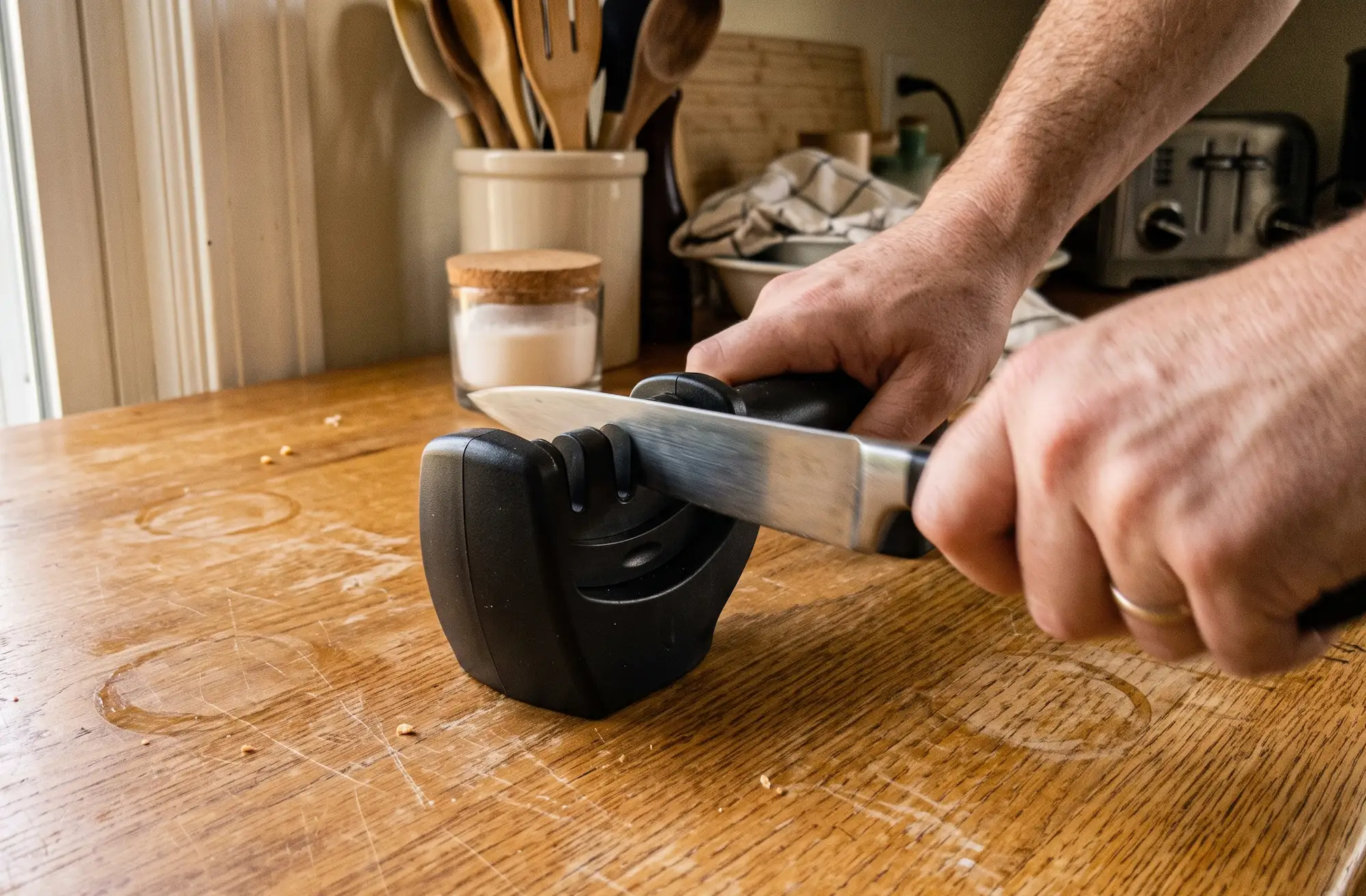
One hand holds the sharpener by the handle, the other pulls the knife through the V-slot.
Pros
Pull-through sharpeners are quick and intuitive when you don’t have much time. Their compact size makes them easy to store, and they often work with most standard kitchen knives. Another advantage is that you don’t have to think about the sharpening angle, but that also becomes the main limitation. The fixed angle offers no flexibility for different blade types or edge preferences.
These tools can bring a dull knife back to usability, but they rarely achieve the kind of razor-sharp edge that professional chefs rely on.
Cons
Pull-through sharpeners often use a fixed sharpening angle, which means you can’t adjust it to match your knife’s original edge design. Because of that, they rarely suit all blades — European knives and Japanese knives, for example, are typically sharpened at different angles.
Many models are also highly abrasive, removing too much material from the blade with each use. This can significantly shorten the knife’s lifespan and ultimately compromise its sharpness. The process may also cause the edge to fray or develop micro-chips, resulting in sharpness that is short-lived or, in some cases, permanent damage.
This is why pull-through sharpeners are not recommended for premium, high-quality, or very hard steels, such as those often used in Japanese or Damascus knives.
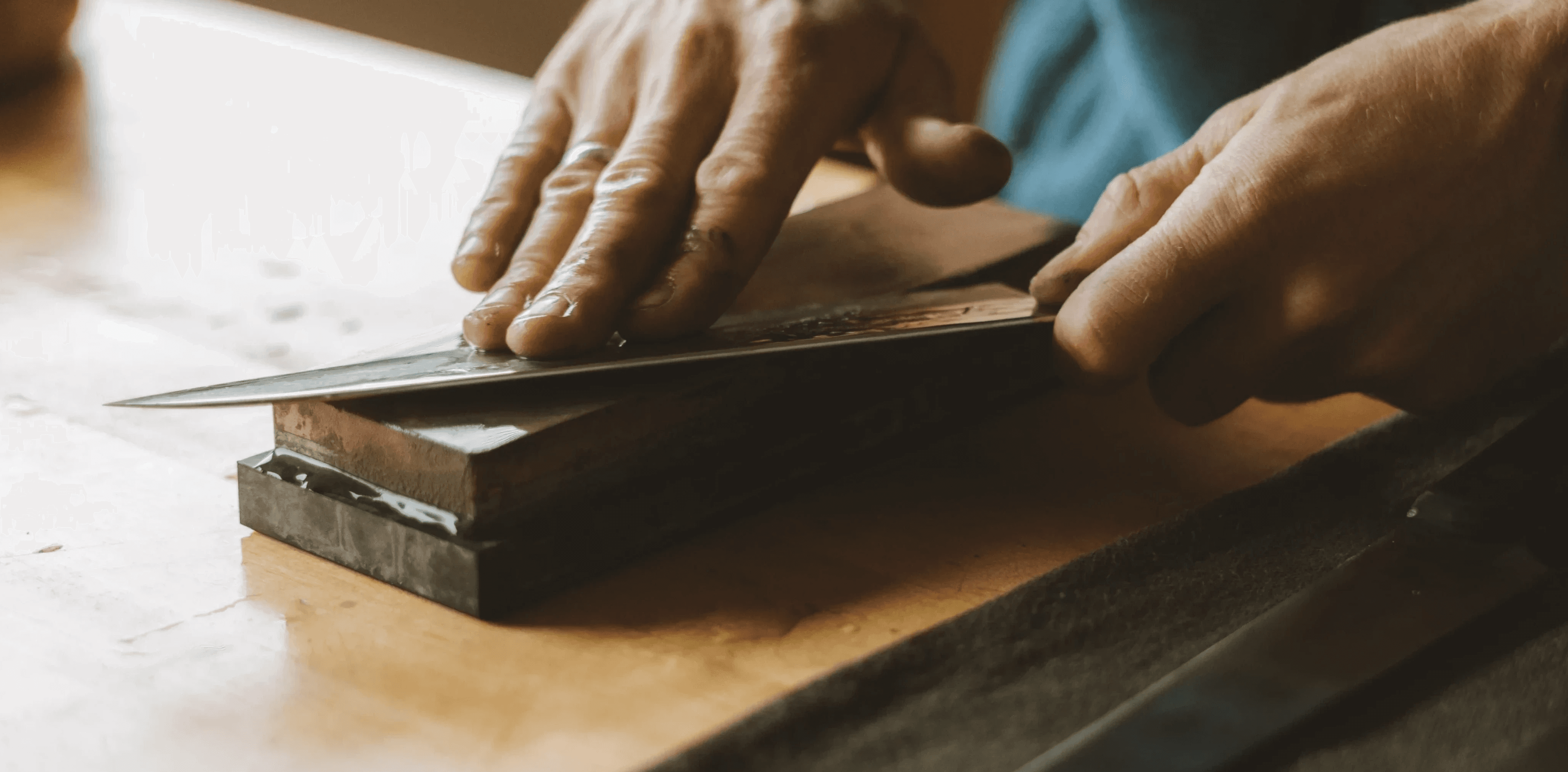
Manual knife sharpening with a whetstone. Achieving a refined edge requires maintaining a consistent angle by hand.
Pros
Whetstones are a gentle yet effective sharpening method. They allow you to work precisely on the areas that need attention, carefully removing material while preserving the knife’s original geometry. By using varying grits, you can refine the edge step by step and achieve impressive sharpness.
This approach is suitable for most smooth-edged knives, making whetstones a trusted choice for those who value traditional craftsmanship and a highly refined result.
Cons
Sharpening with whetstones requires a significant amount of practice and experience. Maintaining the right angle by hand is crucial for success, and it takes time to master the skill. The process cannot be completed quickly before cooking, but instead, it demands focus, patience, and preparation.
Whetstones also need regular care. They must be cleaned, flattened, and hydrated properly to provide a consistent surface. For those with the experience and dedication, they reward craftsmanship, but require practice and patience.
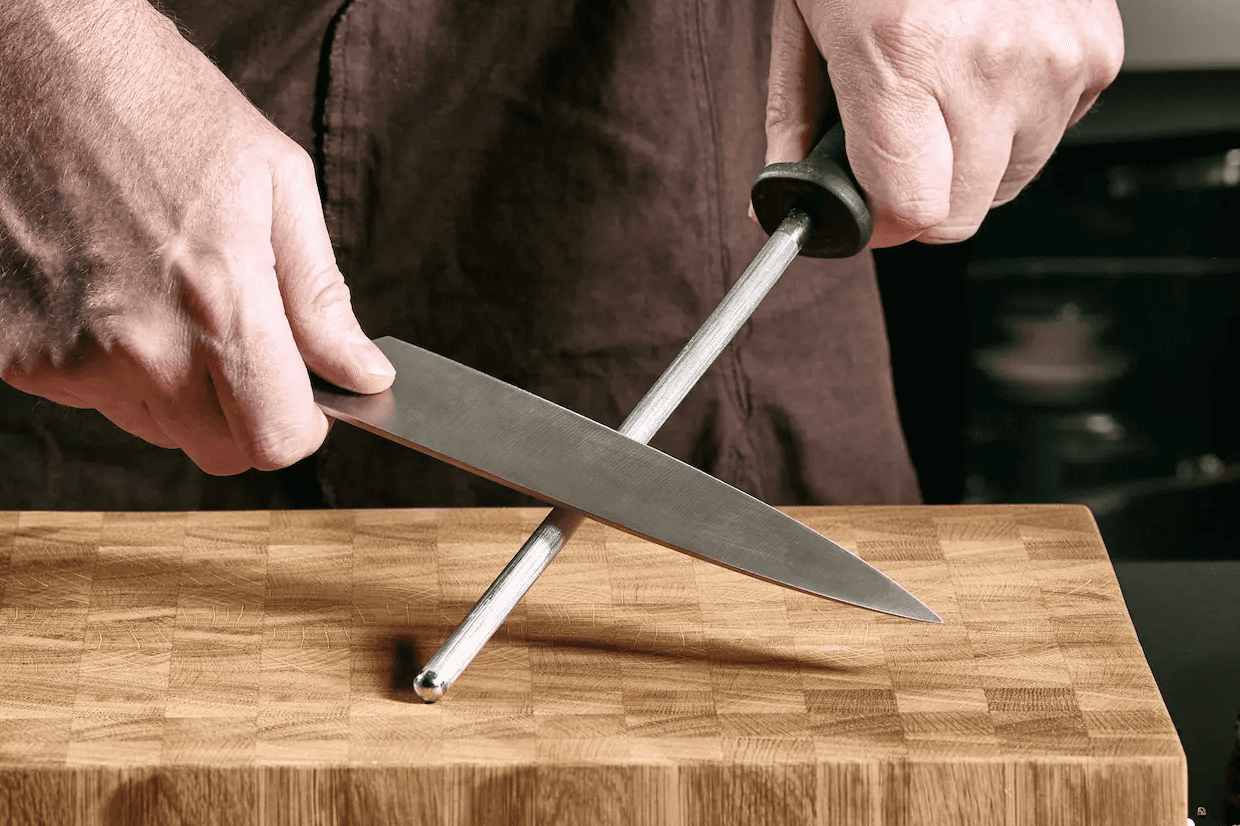
By resting the tip the user gains stability to maintain a consistent angle while realigning the knife's edge between sharpening sessions.
Pros
When used the right way, a honing rod can quickly realign the burr and edge of many European kitchen knives, which at least improves cutting performance in the short term. If cared for properly a high-quality honing rod will last for many years.
Cons
Maintaining a consistent angle and applying just the right amount of pressure takes time and feel. If used incorrectly, a honing rod can cause micro-chips or slight damage, especially to harder steel knives.
It’s also important to remember that a honing rod doesn’t create new sharpness; it only realigns the burr which is already there. The sharpness regained is temporary, so the process must be repeated frequently.

With the HORL Rolling Knife Sharpeners, the knife is held at a fixed angle by the magnetic angle support to ensure consistent sharpening. Credits: HORL, Ruf
Pros
Guided systems take the guesswork out of sharpening. They allow anyone to achieve an exact, repeatable edge without depending on advanced technique.
Adjustable angles make them suitable for different knives, from fine chef’s knives to high-end outdoor blades and even a variety of Japanese Knives. With consistent pressure and movement, they are a gentle yet effective method that removes only what’s necessary, protecting the knife’s steel and extending its lifespan. They are a time-saving method for quickly refreshing the sharpness of a knife before cooking. Because the angle is fixed by the magnetic support, the honing disc can be used between sharpening sessions to effectively realign the edge at the exact same angle.
Cons
Some users may find that the first sharpening of a very dull knife takes a little longer, as the edge is being completely reset to the proper geometry. This is a one-time process, and once the optimal angle is set, sharpenings after that are quick and effortless.
And if your knife needs that extra bit of attention, the Coarse Diamond Disc provides faster material removal and makes even challenging blades easy to restore.
What might seem like added time at first is really an investment in precision. Once sharpened correctly, your knives can be maintained easily and consistently, ensuring lasting sharpness and superior performance for years to come.
How To Choose the Right Sharpener for Beginners
The best place to start when buying your first knife sharpener is to think about the types of knives you own, how you prefer to care for them, and with which method you feel most comfortable. These few key factors will help you find a sharpener that fits both your kitchen and your confidence level:
Skill Level: If you’re new to sharpening, look for a tool that offers guidance and consistency. Systems that maintain a fixed angle, like the HORL Rolling Knife Sharpener, remove the guesswork and make it simple to achieve precise results, even on your first try.
Frequency of Use: Think about how often you cook and how frequently you’ll need to restore your knife’s edge. In any case, a guided sharpener provides a perfect balance of accuracy and convenience. It’s ready whenever you need it, without requiring practiced technique.
Types of Knives Owned: Not all knives have the same sharpening angle or thickness. If your collection includes a mix of chef’s knives, paring knives, and specialty blades, choose a system that allows for at least 15° and 20° sharpening angles, if not more.
Budget and Durability: Investing in a well-made sharpener provides consistent performance and lasting quality. A premium system will protect your knives and provide years of use, making it more cost-effective over time than repeatedly replacing inexpensive tools.
Space and Storage: A sharpener should fit naturally into your kitchen. Compact, durable systems like the HORL® Rolling Knife Sharpener require minimal storage space, are an eye-catching addition to every kitchen, and deliver professional results whenever needed.
HORL®3: What Makes It Ideal for Beginners
The HORL®3 represents the next evolution of our sharpening technology, combining German engineering accuracy with intuitive design to deliver professional results for every skill level. Built with our latest patented sharpening system, it ensures consistent angles, effortless handling, and exceptional sharpness through guided precision and uncompromising craftsmanship.
For those new to premium sharpening, the HORL®3 Cruise offers the ideal starting point. It delivers the same intuitive rolling motion and precise results, but with a simplified setup and an outstanding price-to-performance ratio. The Cruise eliminates guesswork, making it easy for anyone to achieve a consistent, sharp edge in minutes.
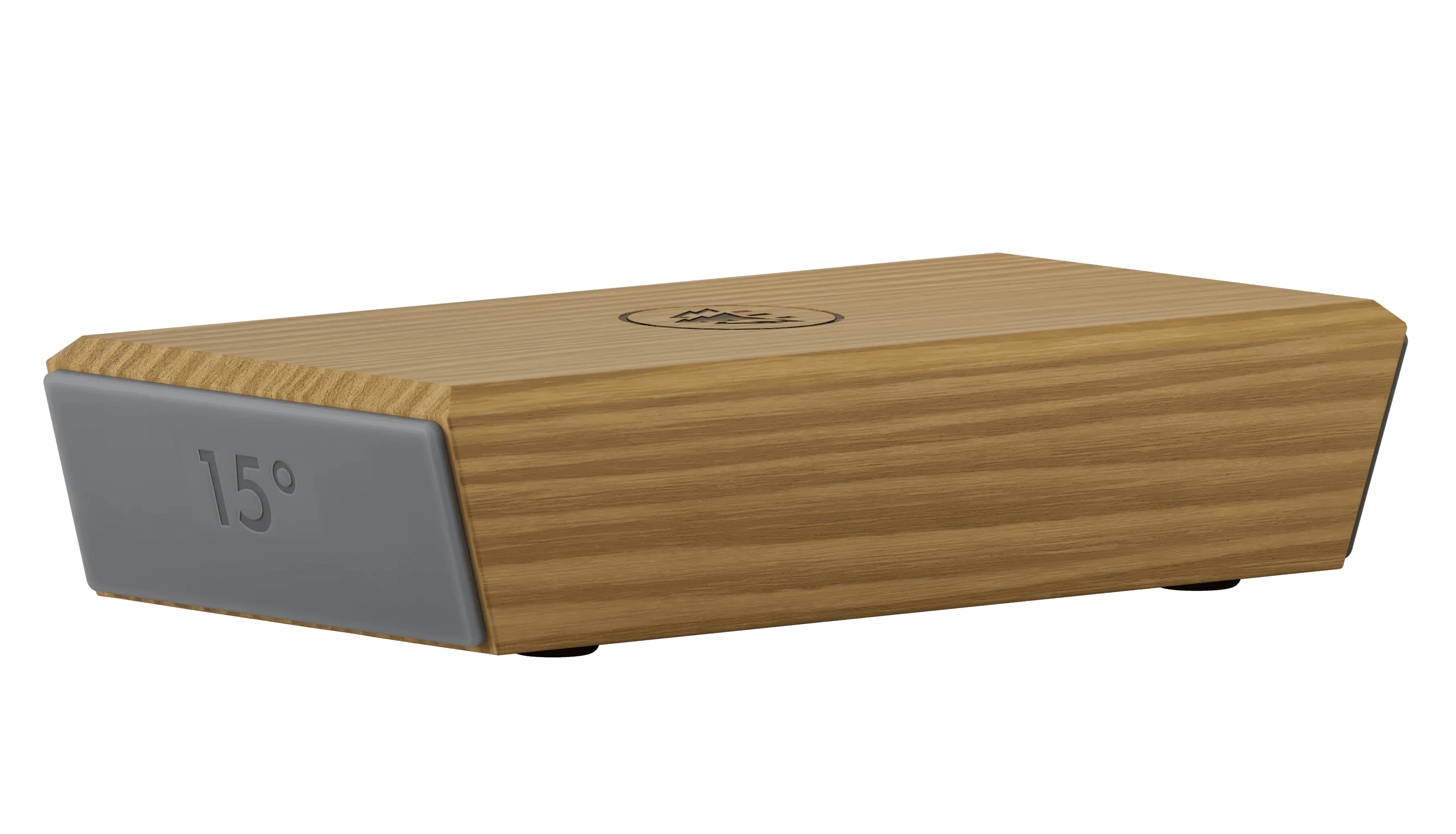

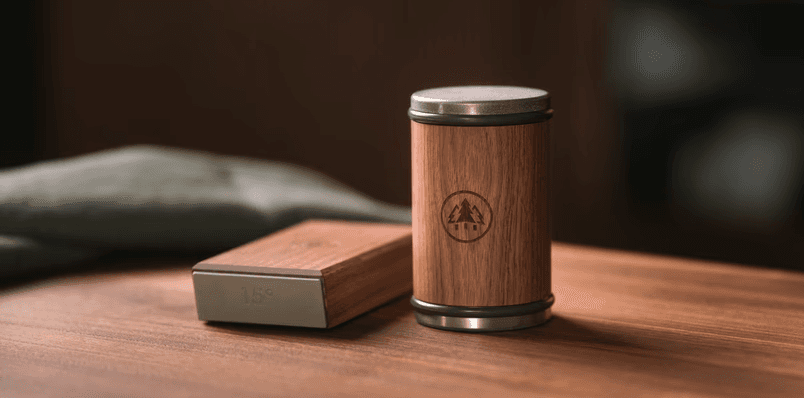
The HORL®3 Oak magnetic angle support with 15-degree and 20-degree sides for secured knife sharpening. Credit: HORL
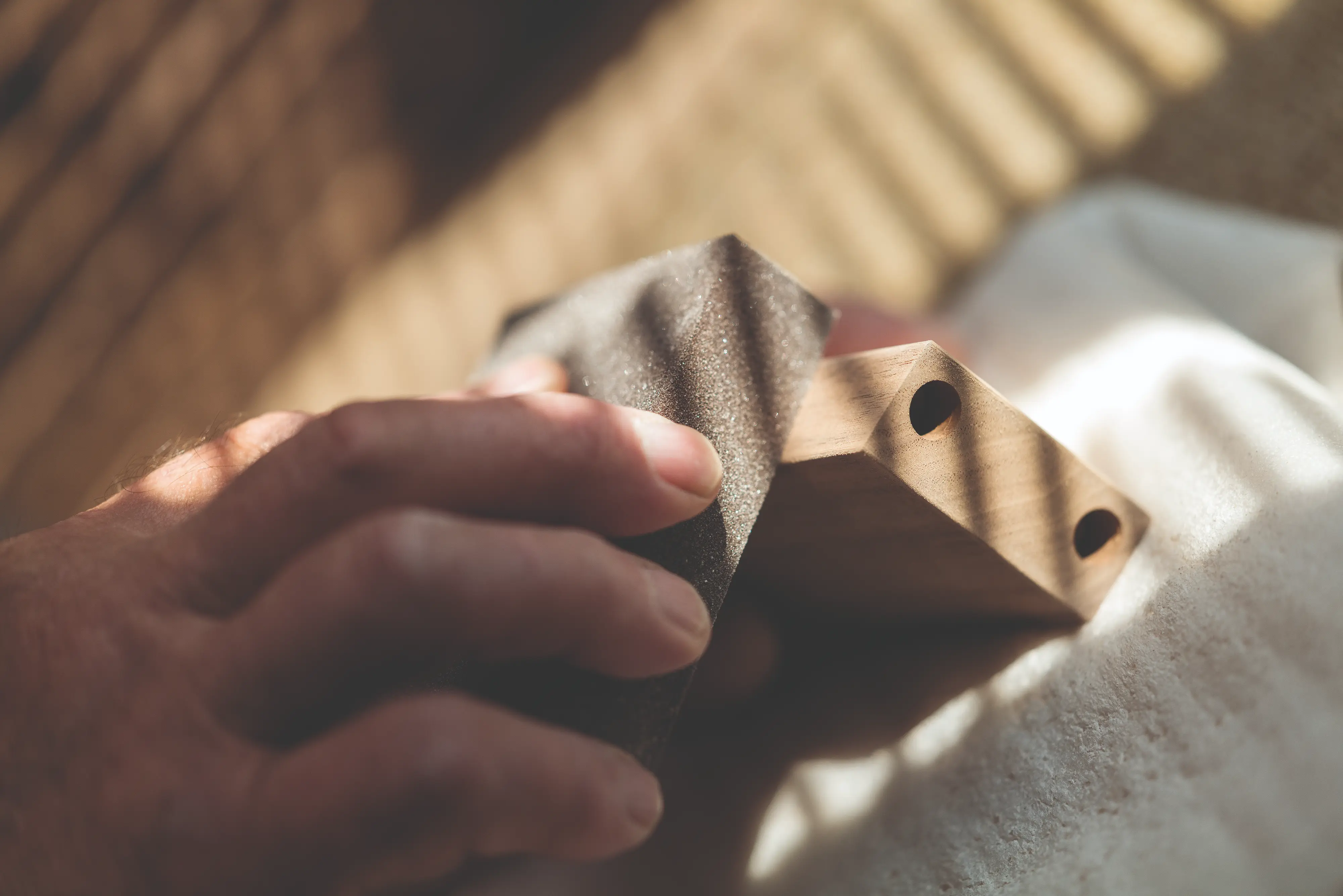
Precision by hand: Fine sanding the oak block of a HORL®3 magnetic angle support in our Black Forest manufactory. | Credit: HORL, Ruf
Expert Knife Sharpening Tips for Beginners
Once you’ve chosen your sharpener, a few small habits will help keep your knives sharp and perform beautifully. Sharpening is only one part of knife care — how you use, clean, and store your tools makes all the difference.
Follow these steps to help turn your dull blades into razor-sharp knives:
Start with a Clean Knife: Before sharpening, wipe your knife clean and dry. Residue or oil can interfere with the sharpening process and reduce the effectiveness of the abrasive surface. A clean blade also makes it easier to monitor the bevel (the shape of the cutting edge) as you work.
Let the Sharpener Do the Work: Whether you use a HORL rolling knife sharpener or another system, you don’t need to apply heavy pressure. Smooth, steady motion creates the most consistent edge and protects the blade from uneven wear.
Hone Regularly: For home cooks, regular honing helps maintain alignment between full sharpening sessions. A few quick strokes before or after cooking will keep your edge feeling sharp longer.
Store Knives Safely: Use a magnetic knife block, in-drawer insert, or blade guard to protect the edge from contact with other utensils. A secure storage method helps preserve sharpness and prevents accidental nicks.
Clean Carefully: After sharpening, wipe your knife to remove any fine particles before use. Always hand-wash and dry your knives.
Curious about professional knife habits? Discover what professional chefs taught us about knife care and how they keep their blades in top condition.
FAQs for Beginner Knife Sharpeners
Find the Right Knife Sharpener for You at HORL
Finding the right sharpener means finding a tool that fits your style and the way you cook. At HORL, we simplify complexity and created a sharpening system that transforms professional technology into an approachable, easy-to-use experience for everyone — from complete beginners to passionate home chefs.
The HORL®3 models combine patented sharpening innovation, magnetic angle support, and premium materials for effortless precision. Made in the German Black Forest, the Rolling Knife Sharpeners offer anywhere from two to six selectable sharpening angles, high-performance diamond and ceramic discs, and a design built to last a lifetime.
Ready to experience a new standard of sharpening? Sharpen with confidence and discover the HORL® Method. Browse our selection of sharpening systems and accessories to create the ultimate sharpening experience.
From beginners to knife enthusiasts—the different HORL®3 models offer you all the options you need.