Which Materials Are Best for Sharpening and Honing Knives? A Breakdown of the Options
Which Materials Are Best for Sharpening and Honing Knives? A Breakdown of the Options
Which Materials Are Best for Sharpening and Honing Knives? A Breakdown of the Options
Why spend extra time in the kitchen when you could be enjoying the food on your table? A sharp knife doesn’t just make cooking faster—it turns chopping, slicing, and dicing into a seamless, satisfying experience. Over time, even the best blades dull, slowing you down and zapping the joy out of cooking.
So, what’s the best way to keep your knife set in top shape? Finding the right sharpening tool is the first step to culinary success, whether it’s a diamond rod, a whetstone, a honing steel, a rolling knife sharpener, or something else entirely. Keep reading as we break down the most common materials for sharpening and honing tools.
Why spend extra time in the kitchen when you could be enjoying the food on your table? A sharp knife doesn’t just make cooking faster—it turns chopping, slicing, and dicing into a seamless, satisfying experience. Over time, even the best blades dull, slowing you down and zapping the joy out of cooking.
So, what’s the best way to keep your knife set in top shape? Finding the right sharpening tool is the first step to culinary success, whether it’s a diamond rod, a whetstone, a honing steel, a rolling knife sharpener, or something else entirely. Keep reading as we break down the most common materials for sharpening and honing tools.
Overview:
Sharpening vs. Honing – What’s the Difference?
Sharpening vs. Honing – What’s the Difference?
While both sharpening and honing contribute to maintaining a sharp blade, they serve different purposes. Sharpening removes a small amount of material to create a new, sharp edge, while honing helps refine the edge and remove any burrs without significant material removal.
Because of these differences, sharpening and honing require distinct types of material. Abrasive sharpening materials offer different grit options that range from coarse to fine, providing flexibility for various sharpening needs and knife conditions. The material plays a crucial role in sharpening quality, efficiency, and the longevity of the blade's edge.
While both sharpening and honing contribute to maintaining a sharp blade, they serve different purposes. Sharpening removes a small amount of material to create a new, sharp edge, while honing helps refine the edge and remove any burrs without significant material removal.
Because of these differences, sharpening and honing require distinct types of material. Abrasive sharpening materials offer different grit options that range from coarse to fine, providing flexibility for various sharpening needs and knife conditions. The material plays a crucial role in sharpening quality, efficiency, and the longevity of the blade's edge.
Types of Materials Used for Sharpening
Types of Materials Used for Sharpening
To keep your carving, everyday, or paring knives in top condition, at some point, you'll need to sharpen their blades. The best materials used to sharpen knives depend on your knife, its dullness, and your skill level. However, there are certain materials that stand out for their benefits.
To keep your carving, everyday, or paring knives in top condition, at some point, you'll need to sharpen their blades. The best materials used to sharpen knives depend on your knife, its dullness, and your skill level. However, there are certain materials that stand out for their benefits.
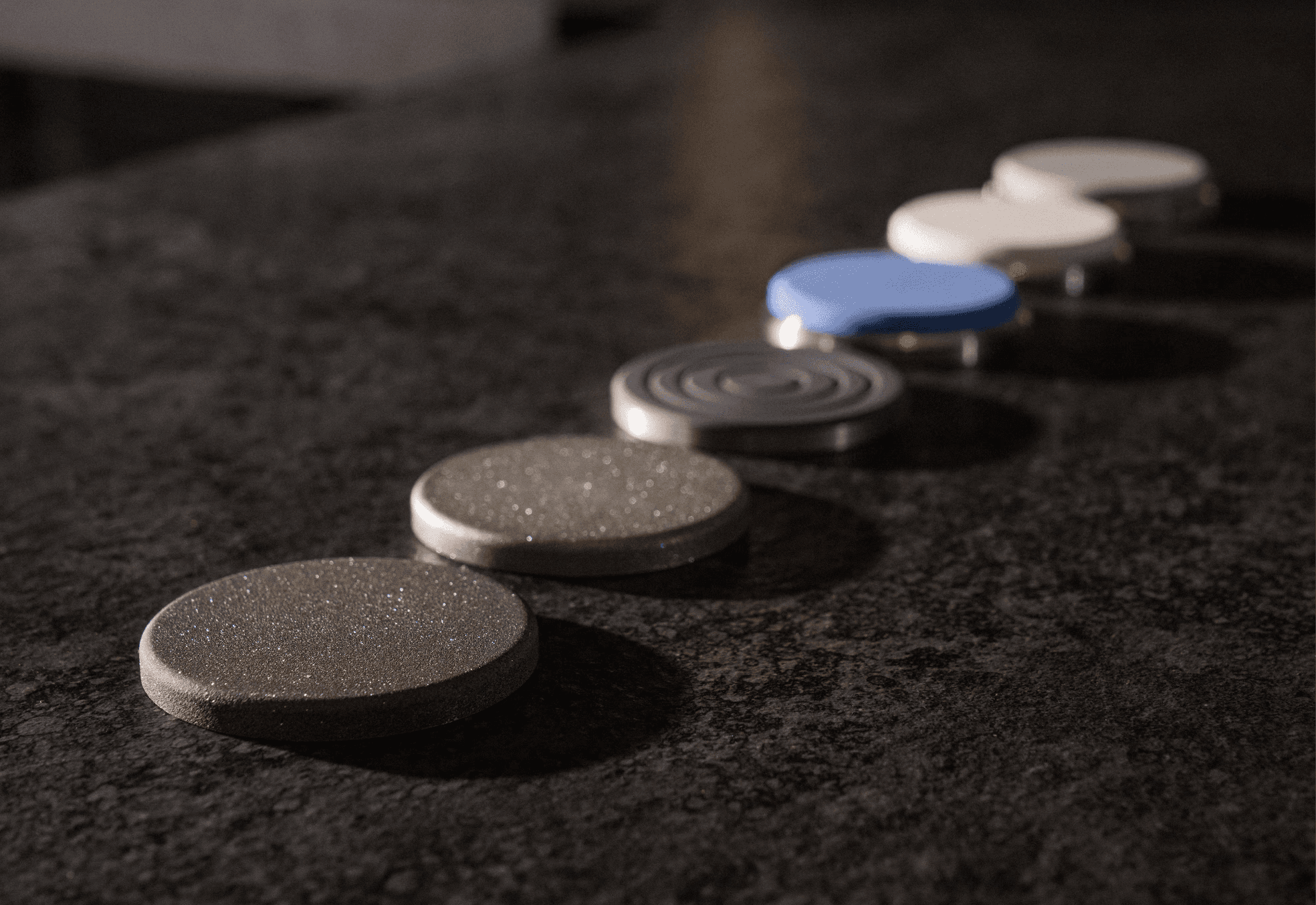
The HORL®3 comes with the HORL®3 Diamond disc for sharpening, as seen in this image. On the opposing side is the HORL®3 Ceramic disc mounted for honing afterward. The discs can be easily exchanged with additional discs ranging from Diamond Coarse to Kagami Ultra Fine. Credits: HORL, Markus Ruf
*Sharp Knives make clean, precise cuts, enhance kitchen safety, and help preserve the flavor of fresh ingredients — a must-have tool for home cooks and professionals alike.
Diamond
Diamond
Industrial diamonds—used for diamond sharpening discs or sharpening steels—are renowned for their power and longevity, making them one of the most popular options for serious chefs and seasoned home cooks alike. This material offers unparalleled efficiency when it comes to sharpening dull knives made of hard materials.
Industrial diamonds—used for diamond sharpening discs or sharpening steels—are renowned for their power and longevity, making them one of the most popular options for serious chefs and seasoned home cooks alike. This material offers unparalleled efficiency when it comes to sharpening dull knives made of hard materials.
Pros
Pros
Extreme hardness: Diamond has no problem sharpening steel (carbon, stainless, etc.). It's the hardest naturally occurring material.
High durability: If used and cared for properly, you won’t have to replace a diamond sharpening tool.
Ease and convenience: Diamond removes excess material faster than other materials and produces a sharp edge with minimal effort.
Extreme hardness: Diamond has no problem sharpening steel (carbon, stainless, etc.). It's the hardest naturally occurring material.
High durability: If used and cared for properly, you won’t have to replace a diamond sharpening tool.
Ease and convenience: Diamond removes excess material faster than other materials and produces a sharp edge with minimal effort.
Cons
Cons
Higher cost: Can be more expensive than sharpening systems made with other materials such as synthetic sharpening materials.
Can require practice: Diamond sharpens knives quickly. It’s important to keep a steady angle so you don’t remove too much of the knife material. Our sharpening systems offer magnetic angle support to make it easier for everyone from beginners to pros.
Higher cost: Can be more expensive than sharpening systems made with other materials such as synthetic sharpening materials.
Can require practice: Diamond sharpens knives quickly. It’s important to keep a steady angle so you don’t remove too much of the knife material. Our sharpening systems offer magnetic angle support to make it easier for everyone from beginners to pros.
Aluminum Oxide (Corundum)
Aluminum Oxide (Corundum)
Aluminum oxide, or corundum, offers efficiency, making it a popular choice for sharpening stones or discs. Corundum is typically produced primarily from aluminum oxide with variable additives. This artificial abrasive is used in sharpening stones due to its hardness and ability to produce a fine edge.
Aluminum oxide, or corundum, offers efficiency, making it a popular choice for sharpening stones or discs. Corundum is typically produced primarily from aluminum oxide with variable additives. This artificial abrasive is used in sharpening stones due to its hardness and ability to produce a fine edge.
Pros
Pros
Cost-effective: Aluminum oxide is highly efficient and affordable.
Versatile: Suitable for both Western-style and Japanese knives.
Fine sharpening: Good sharpening material for gradually achieving a razor-sharp edge.
Cost-effective: Aluminum oxide is highly efficient and affordable.
Versatile: Suitable for both Western-style and Japanese knives.
Fine sharpening: Good sharpening material for gradually achieving a razor-sharp edge.
Cons
Cons
Less durable: Not as long-lasting as stainless steel or diamond-based sharpening tools
Less durable: Not as long-lasting as stainless steel or diamond-based sharpening tools
Silicon Carbide
Silicon Carbide
Carborundum stones, made from crystals of silicon carbide, are a powerful and abrasive option for bringing life back to dull knives.
Carborundum stones, made from crystals of silicon carbide, are a powerful and abrasive option for bringing life back to dull knives.
Pros
Pros
Grit Variety: Available in coarse grit and finer grits, depending on your sharpening goals.
Coarse Grit: Efficiently removes hard materials and revives dull blades.
Finer Grits: Can polish the blade to mirror-sharpness at a good price ratio.
Grit Variety: Available in coarse grit and finer grits, depending on your sharpening goals.
Coarse Grit: Efficiently removes hard materials and revives dull blades.
Finer Grits: Can polish the blade to mirror-sharpness at a good price ratio.
Cons
Cons
Durability: As corundum is a naturally occurring mineral, the sharpening material might wear down over time with consistent, very frequent use.
Durability: As corundum is a naturally occurring mineral, the sharpening material might wear down over time with consistent, very frequent use.
Types of Material Used for Honing
Types of Material Used for Honing
These materials are typically not or only minimally abrasive compared to sharpening materials. Ideally, they are used to further smooth the result after the sharpening process with an abrasive material.
These materials are typically not or only minimally abrasive compared to sharpening materials. Ideally, they are used to further smooth the result after the sharpening process with an abrasive material.
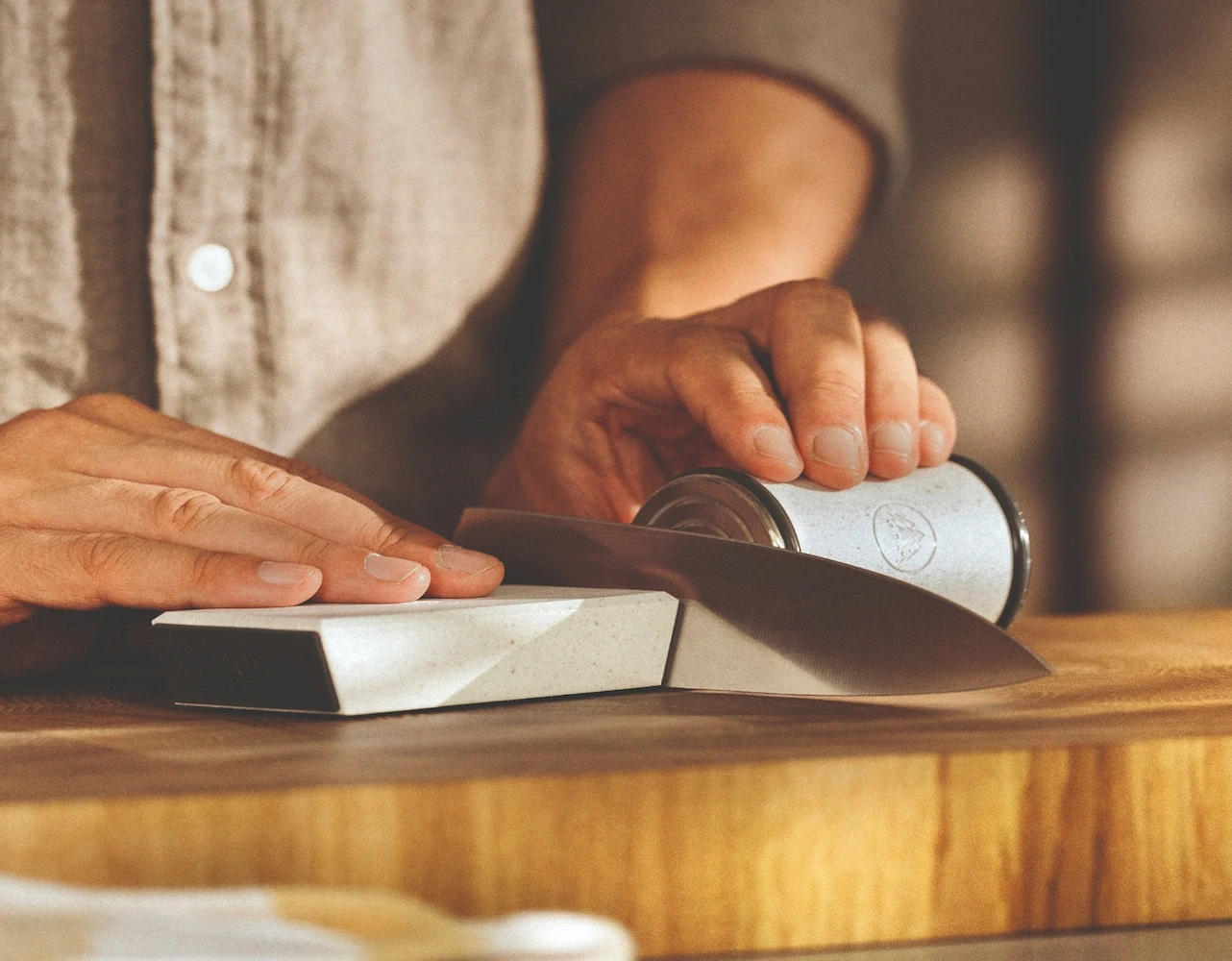
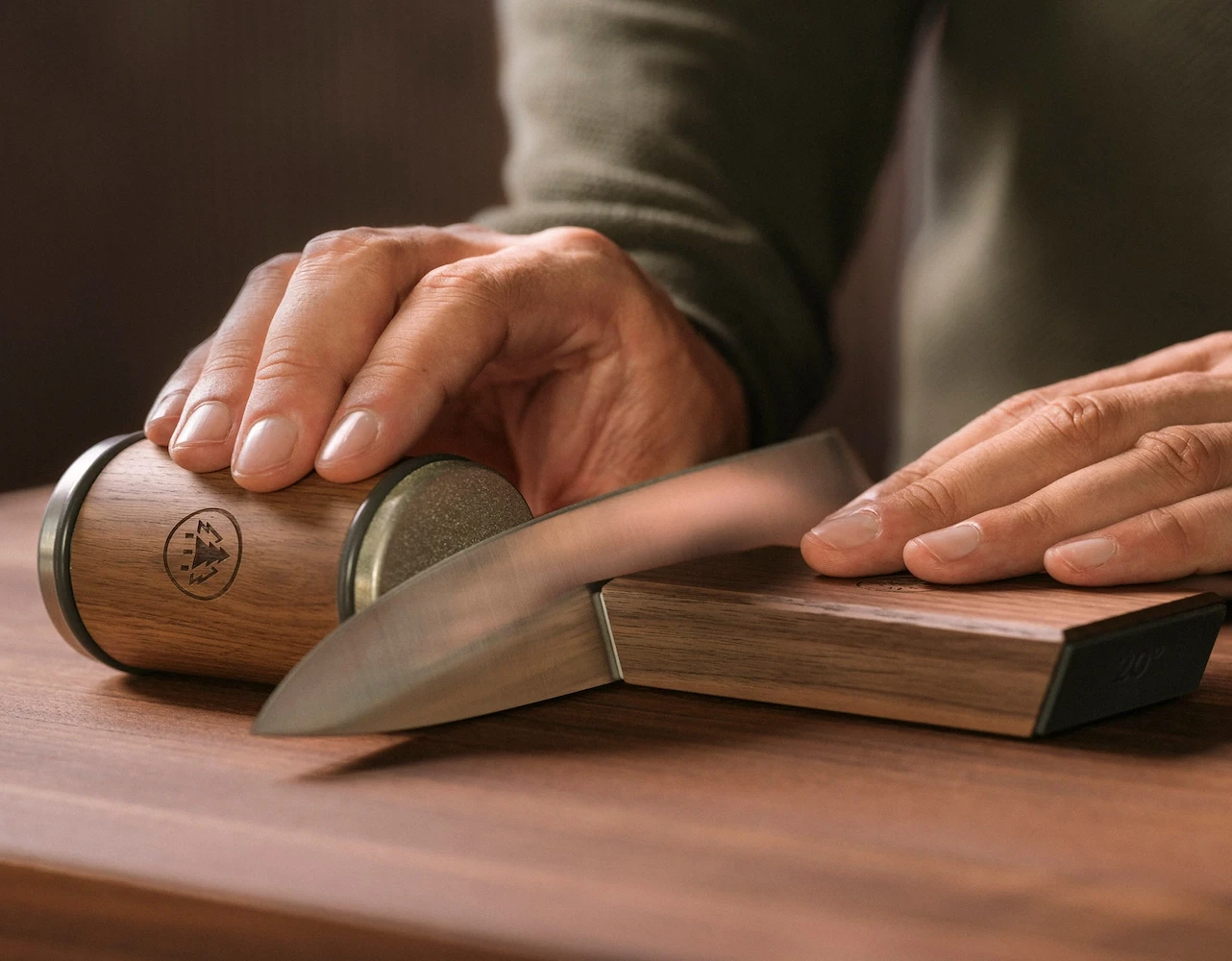
This image shows the HORL®3 Cruise rolling knife sharpener in use, with its stainless steel disc gently honing the blade edge for a smooth finish after sharpening with the diamond disc on the opposite side. Credits: HORL, Markus Ruf
This image shows the HORL®3 Cruise rolling knife sharpener in use, with its stainless steel disc gently honing the blade edge for a smooth finish after sharpening with the diamond disc on the opposite side. Credits: HORL, Markus Ruf
Ceramic
Ceramic
Ceramic whetstones or discs are a fantastic choice for adding a refined edge to your knives. Depending on the sharpening tool, ceramic can contain a very small percentage of abrasive grains, which leads to a very slight material removal, but this tends to have more of a smoothing effect. So to bring back the knife blade to top condition, it makes sense to use ceramic whetstones in combination with other abrasive sharpening materials and use them more to smooth the blade and make sure there is no burr left.
Ceramic whetstones or discs are a fantastic choice for adding a refined edge to your knives. Depending on the sharpening tool, ceramic can contain a very small percentage of abrasive grains, which leads to a very slight material removal, but this tends to have more of a smoothing effect. So to bring back the knife blade to top condition, it makes sense to use ceramic whetstones in combination with other abrasive sharpening materials and use them more to smooth the blade and make sure there is no burr left.
Pros
Pros
Precision finishing: Can be used to refine the outcome once the initial sharpening (e.g., with diamond) is complete.
Ideal for maintenance: Excellent for touch-ups (light re-sharpening) and maintaining your knife’s blade.
Fine results: An ideal starting point for gradually achieving a razor-sharp edge.
Precision finishing: Can be used to refine the outcome once the initial sharpening (e.g., with diamond) is complete.
Ideal for maintenance: Excellent for touch-ups (light re-sharpening) and maintaining your knife’s blade.
Fine results: An ideal starting point for gradually achieving a razor-sharp edge.
Cons
Cons
Not for dull knives: Ceramic is not suitable for sharpening an already dull blade.
Not for dull knives: Ceramic is not suitable for sharpening an already dull blade.
Stainless Steel
Stainless Steel
Stainless steel is a go-to choice for many due to its durability and reliability. But it depends on whether the material is used alone or in combination with other sharpening materials. With a honing rod, it's important to know that it realigns the burr, helping to maintain the sharpness of the knife edge. However, for very dull knives, you'll need an abrasive sharpening method. Stainless steel discs on a rolling sharpener are typically used in combination with diamond sharpening discs to ensure a smooth knife edge and remove any grinding dust in just a few strokes.
Stainless steel is a go-to choice for many due to its durability and reliability. But it depends on whether the material is used alone or in combination with other sharpening materials. With a honing rod, it's important to know that it realigns the burr, helping to maintain the sharpness of the knife edge. However, for very dull knives, you'll need an abrasive sharpening method. Stainless steel discs on a rolling sharpener are typically used in combination with diamond sharpening discs to ensure a smooth knife edge and remove any grinding dust in just a few strokes.
Pros
Pros
Highly durable: Strong, durable, and built for frequent use.
Low maintenance: Doesn’t chip easily or require as much maintenance as other materials.
Great for upkeep: Ideal for maintaining the edges of many European kitchen knives.
Highly durable: Strong, durable, and built for frequent use.
Low maintenance: Doesn’t chip easily or require as much maintenance as other materials.
Great for upkeep: Ideal for maintaining the edges of many European kitchen knives.
Cons
Cons
Maintenance-focused: Better suited for maintaining sharp edges rather than restoring very dull blades.
Not abrasive: Since stainless steel primarily straightens the edge rather than removing material, a dull knife typically requires an abrasive material, like diamond, prior to honing.
Maintenance-focused: Better suited for maintaining sharp edges rather than restoring very dull blades.
Not abrasive: Since stainless steel primarily straightens the edge rather than removing material, a dull knife typically requires an abrasive material, like diamond, prior to honing.
What HORL® Offers
What HORL® Offers
Our range of honing and sharpening discs is where innovation, premium materials, and skilled craftsmanship meet. Our goal is to keep the edge of your knife sharper than ever.
Our range of honing and sharpening discs is where innovation, premium materials, and skilled craftsmanship meet. Our goal is to keep the edge of your knife sharper than ever.
A Range of Different Sharpening Materials
A Range of Different Sharpening Materials
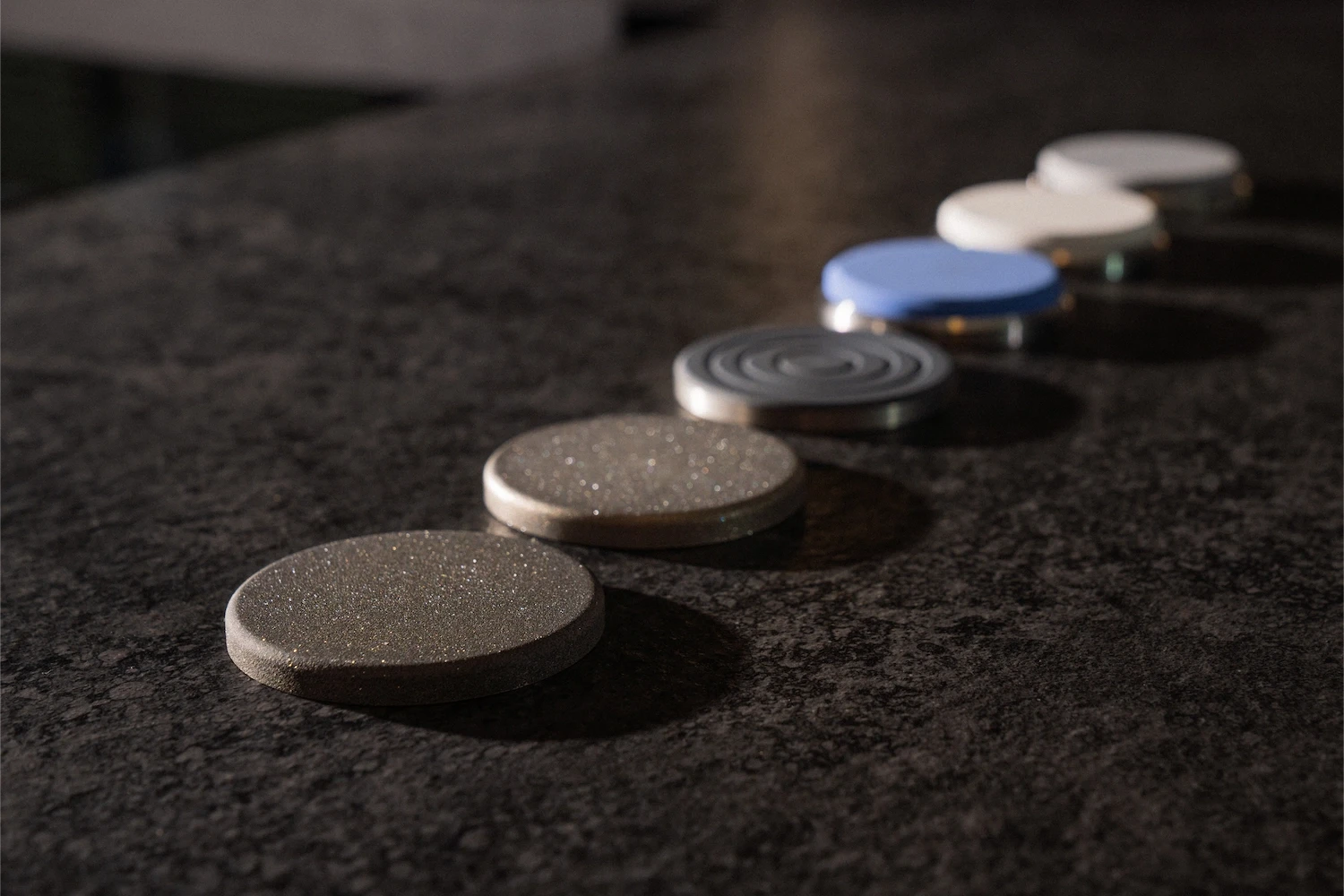
Built to maintain both Western-style and Japanese-style knives, HORL offers flexible disc combinations of diamond discs, stainless steel, ceramic honing discs, corundum whetstones, and the Kagami to ensure your knives are ready to slice and dice when you are.
Built to maintain both Western-style and Japanese-style knives, HORL offers flexible disc combinations of diamond discs, stainless steel, ceramic honing discs, corundum whetstones, and the Kagami to ensure your knives are ready to slice and dice when you are.
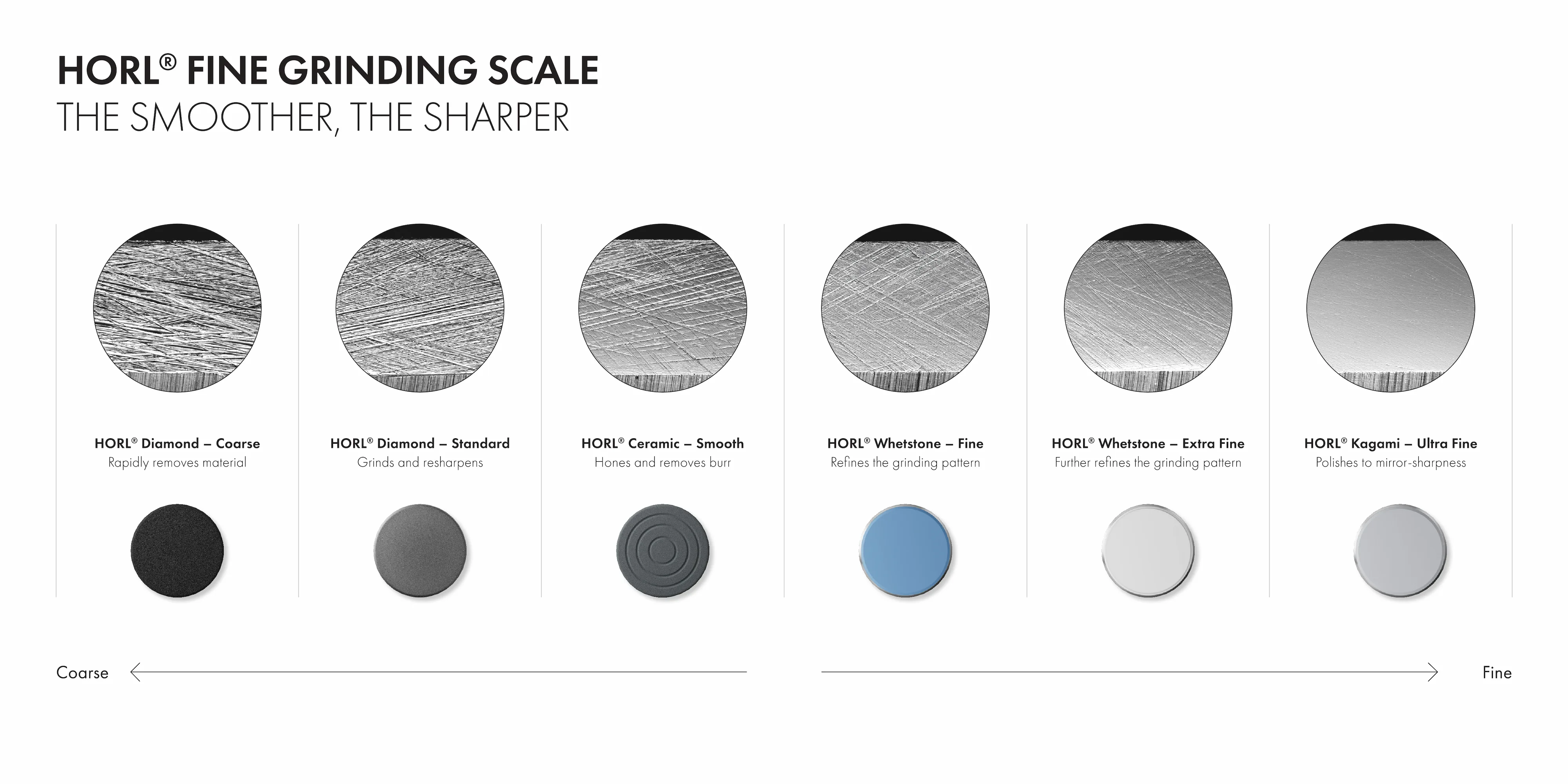
The different discs—except stainless steel—for the HORL Rolling Knife Sharpeners shown on a scale from coarse to fine, with a corresponding microscopic photograph of the knife's edge after use with each. Find more information on the different HORL Discs here. Credit: HORL
The different discs—except stainless steel—for the HORL Rolling Knife Sharpeners shown on a scale from coarse to fine, with a corresponding microscopic photograph of the knife's edge after use with each. Find more information on the different HORL Discs here. Credit: HORL
Versatile, Long-Lasting Discs
Versatile, Long-Lasting Discs
We’re obsessed with making high-quality knife sharpeners that bring joy to the sharpening process, last a long time, and require minimal maintenance.
We’re obsessed with making high-quality knife sharpeners that bring joy to the sharpening process, last a long time, and require minimal maintenance.
Innovation with Planetary Gearing
Innovation with Planetary Gearing
Drawing inspiration from the mechanically intricate realm of timepieces, our HORL®2 Pro and HORL®3 Pro models feature a unique planetary gearing system that makes the sharpening process faster.
Drawing inspiration from the mechanically intricate realm of timepieces, our HORL®2 Pro and HORL®3 Pro models feature a unique planetary gearing system that makes the sharpening process faster.
Find the Best Knife Sharpener Materials at HORL®
Find the Best Knife Sharpener Materials at HORL®
At HORL®, we prioritize high-quality materials like diamond, stainless steel, and ceramics. We also developed the HORL® Kagami with our Japanese partners to achieve a completely new level of sharpness—three times finer than standard Japanese whetstones. Our German-engineered knife sharpening system is designed to keep your kitchen knives and professional chef knives sharp, safe, and ready for use. Enjoy the whole HORL experience and explore our collection of sharpeners and accessories.
At HORL®, we prioritize high-quality materials like diamond, stainless steel, and ceramics. We also developed the HORL® Kagami with our Japanese partners to achieve a completely new level of sharpness—three times finer than standard Japanese whetstones. Our German-engineered knife sharpening system is designed to keep your kitchen knives and professional chef knives sharp, safe, and ready for use. Enjoy the whole HORL experience and explore our collection of sharpeners and accessories.
Il classico nella perfezione
Il classico nella perfezione
Il classico nella perfezione
Knife sharpening with everything that goes with it—with the HORL®3 and the right accessories, you’ll get the best out of your blades. From coarse to ultra-fine whetstones for even more sharpness, to the HORL® Leather for a professional finish, and stylish storage solutions—discover all the accessories for your perfect sharpening experience.