
Master Knife Sharpening: How To Effectively Use a Leather Strop
Master Knife Sharpening: How To Effectively Use a Leather Strop
Master Knife Sharpening: How To Effectively Use a Leather Strop
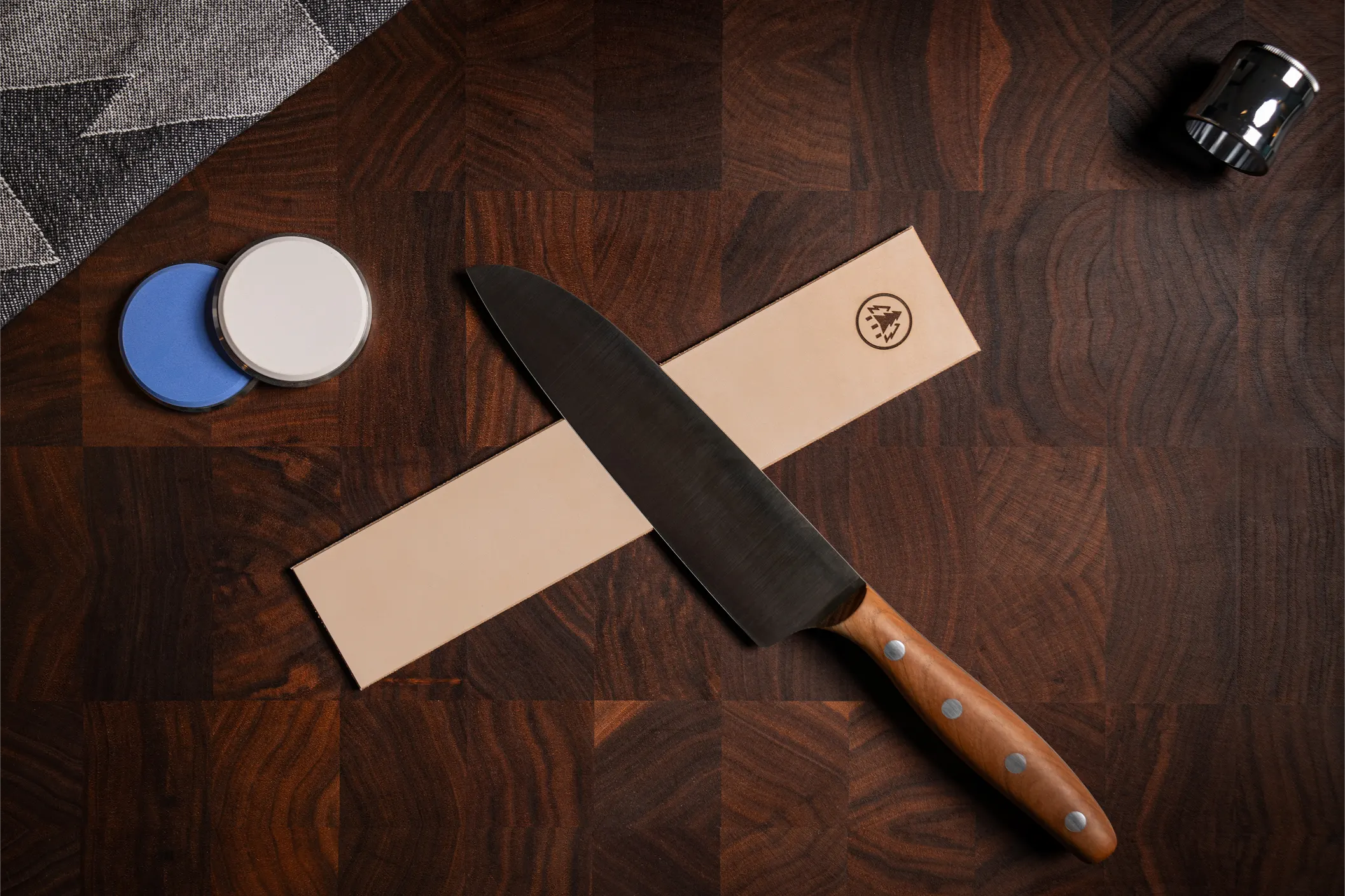
If you want to achieve a sharp knife or even a razor-sharp edge, there’s one more step besides choosing the right material for sharpening and honing: using a leather strop. A leather sharpening strop, typically made from high-quality leather and mounted on a paddle or belt, helps clean and refine your blade.
While sharpening removes metal to form the blade’s edge and honing realigns it, stropping takes it a step further by smoothing out microscopic imperfections, leaving your knife sharper, cleaner, and ready for precise cuts. This way, you can have a professional finish after each sharpening.
The HORL® Leather Strop, for example, is the ideal tool for this final step of the sharpening process. The finely pored surface of the Leather Stop removes even the tiniest grinding residue particles to ensure a smooth, clean, sharpened knife.
If you want to achieve a sharp knife or even a razor-sharp edge, there’s one more step besides choosing the right material for sharpening and honing: using a leather strop. A leather sharpening strop, typically made from high-quality leather and mounted on a paddle or belt, helps clean and refine your blade.
While sharpening removes metal to form the blade’s edge and honing realigns it, stropping takes it a step further by smoothing out microscopic imperfections, leaving your knife sharper, cleaner, and ready for precise cuts. This way, you can have a professional finish after each sharpening.
The HORL® Leather Strop, for example, is the ideal tool for this final step of the sharpening process. The finely pored surface of the Leather Stop removes even the tiniest grinding residue particles to ensure a smooth, clean, sharpened knife.
Overview:
Choosing the Right Leather Strop
Choosing the Right Leather Strop
It may seem simple, but there are a lot of factors to think about when choosing a leather strop. You’ll want to consider the following:
Size and Thickness: Make sure it’s big enough for your knives.
Leather Quality: Go for high-quality leather for added honing effect.
Design: The types of strops (i.e., paddle, razor, and leather belt-mounted) are used in different ways and at varying levels. For example, paddle strops are usually reserved for beginners.
It may seem simple, but there are a lot of factors to think about when choosing a leather strop. You’ll want to consider the following:
Size and Thickness: Make sure it’s big enough for your knives.
Leather Quality: Go for high-quality leather for added honing effect.
Design: The types of strops (i.e., paddle, razor, and leather belt-mounted) are used in different ways and at varying levels. For example, paddle strops are usually reserved for beginners.
How a Leather Strop Works: The Science Behind It
How a Leather Strop Works: The Science Behind It
When you run the blade across the leather strop, it gently removes tiny burrs or rough spots left behind during the sharpening process. These imperfections, although microscopic, can affect how sharp and smooth your knife feels. The leather’s natural texture burnishes the edge, creating a cleaner surface without removing metal.
When you run the blade across the leather strop, it gently removes tiny burrs or rough spots left behind during the sharpening process. These imperfections, although microscopic, can affect how sharp and smooth your knife feels. The leather’s natural texture burnishes the edge, creating a cleaner surface without removing metal.
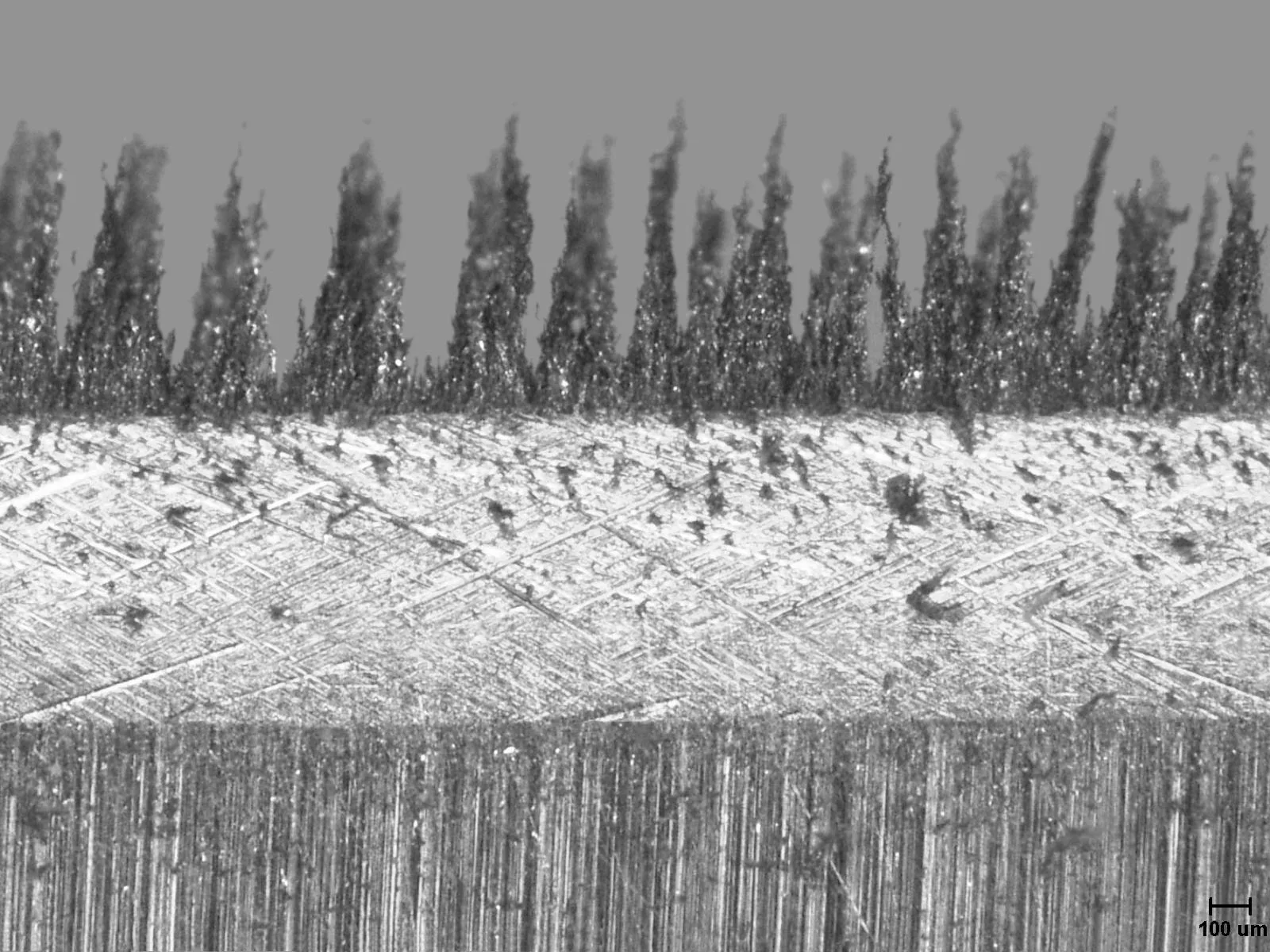
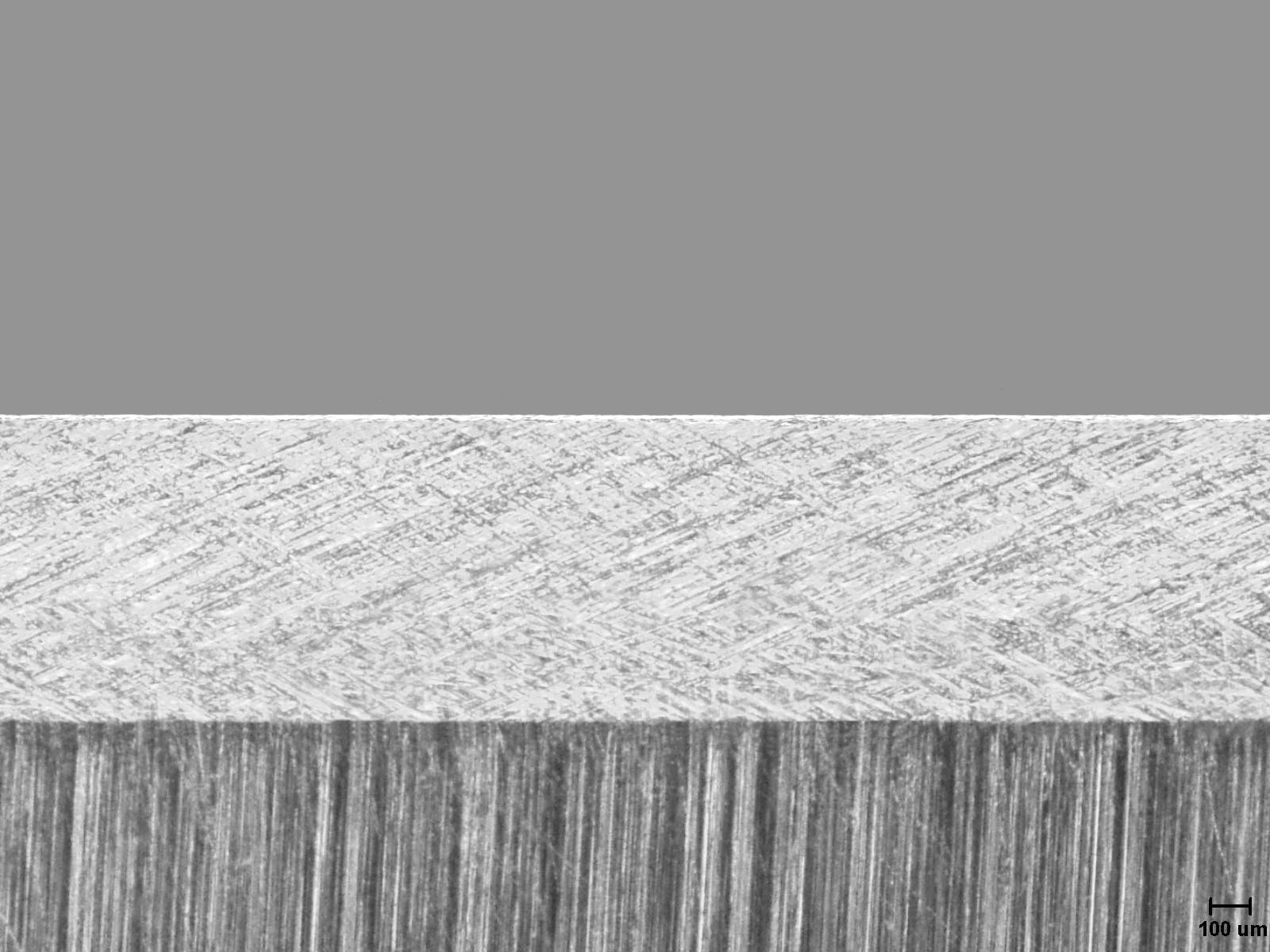
A microscopic "before and after" image of a knife edge, clearly illustrating how stropping with the finely pored surface of the leather removes even the tiniest particles of grinding residue to ensure a smooth, clean blade and professional finish. Credit: HORL
A microscopic "before and after" image of a knife edge, clearly illustrating how stropping with the finely pored surface of the leather removes even the tiniest particles of grinding residue to ensure a smooth, clean blade and professional finish. Credit: HORL
Stropping vs Sharpening – What’s The Difference?
Stropping vs Sharpening – What’s The Difference?
Sharpening removes small amounts of metal from the blade to create a new, sharp edge. This is done using sharpening stones or whetstones and is needed when a knife has become dull or damaged.
Stropping, on the other hand, doesn't remove metal or polish the edge. Instead, its main purpose is to clean the edge and remove any residual debris or microscopic particles left over from sharpening.
If you hear a scratching noise while stropping, it's often a sign that a burr is still present. That burr needs to be addressed with more sharpening before you can reach ideal sharpness. Stropping alone won't remove it, but it can help detect it.
Sharpening removes small amounts of metal from the blade to create a new, sharp edge. This is done using sharpening stones or whetstones and is needed when a knife has become dull or damaged.
Stropping, on the other hand, doesn't remove metal or polish the edge. Instead, its main purpose is to clean the edge and remove any residual debris or microscopic particles left over from sharpening.
If you hear a scratching noise while stropping, it's often a sign that a burr is still present. That burr needs to be addressed with more sharpening before you can reach ideal sharpness. Stropping alone won't remove it, but it can help detect it.
How to Use a Leather Strop: Step-by-Step Guide
How to Use a Leather Strop: Step-by-Step Guide
Follow these instructions on how to strop to achieve a clean and sharp edge:
Follow these instructions on how to strop to achieve a clean and sharp edge:
Step 1: Prepare the Strop
Step 1: Prepare the Strop
Place the leather strop on a flat/stable surface or secure it another way.
Place the leather strop on a flat/stable surface or secure it another way.
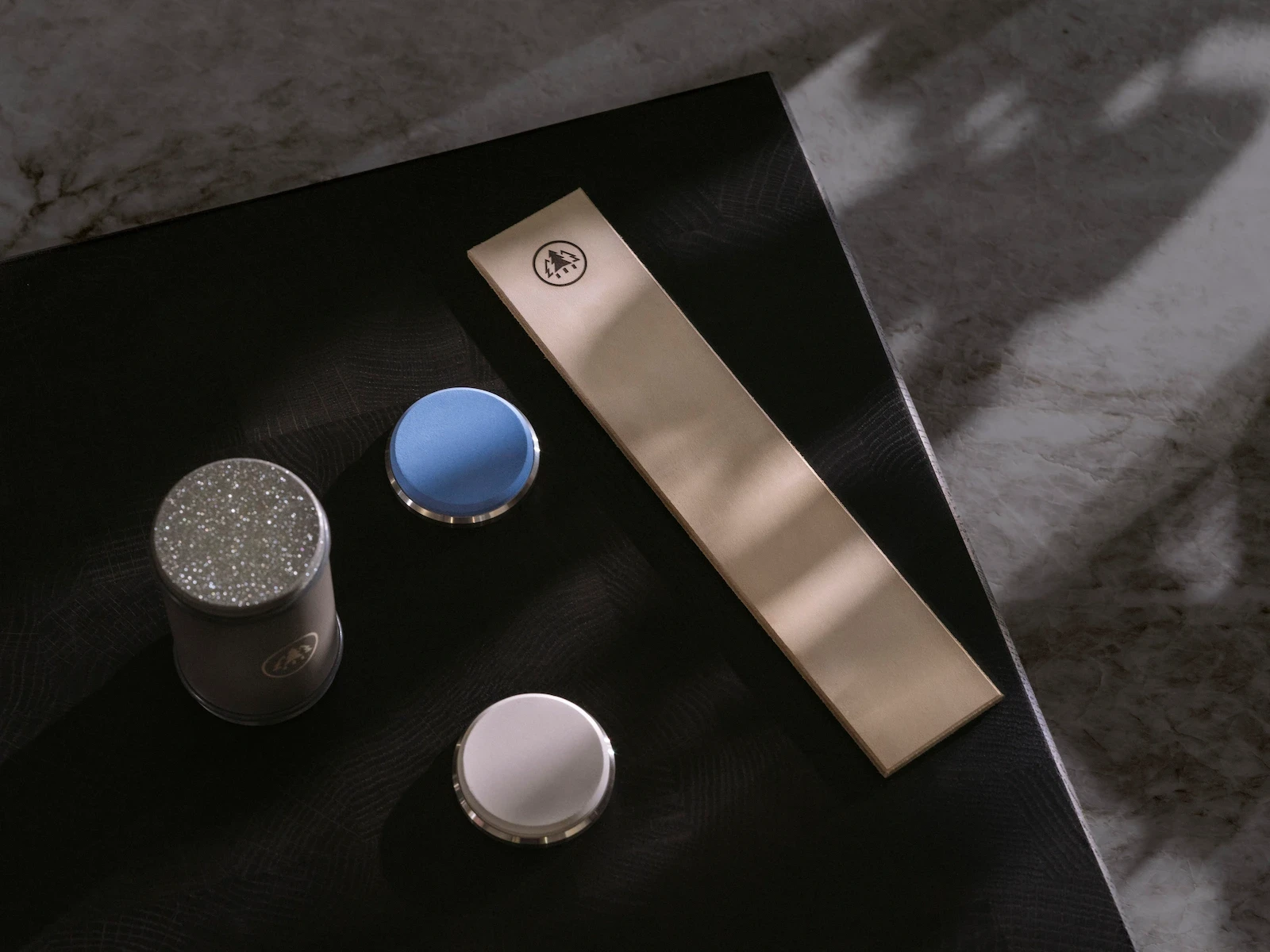
The finely pored surface of the leather removes even the tiniest particles of grinding residue. Credits: HORL, Markus Ruf
The finely pored surface of the leather removes even the tiniest particles of grinding residue. Credits: HORL, Markus Ruf
Step 2: Hold The Knife in the Correct Position
Step 2: Hold The Knife in the Correct Position
Hold the blade at approximately the same angle you used during sharpening (Don’t stress about exact precision; the stropping process is forgiving).
Keep the blade flat enough against the strop to let the edge make contact without digging in.
Ensure the cutting-edge faces away from you.
Hold the blade at approximately the same angle you used during sharpening (Don’t stress about exact precision; the stropping process is forgiving).
Keep the blade flat enough against the strop to let the edge make contact without digging in.
Ensure the cutting-edge faces away from you.
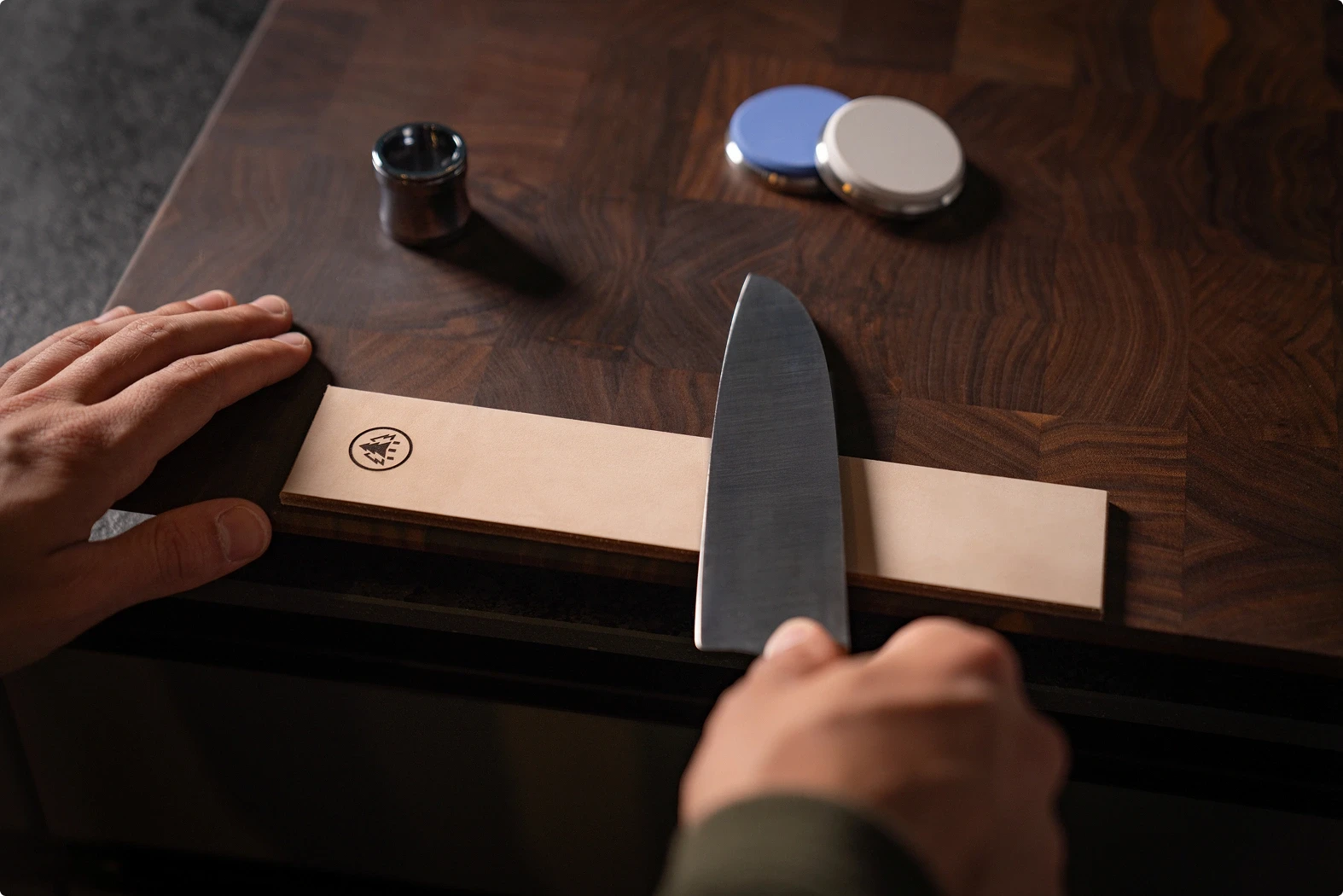
Maintaining a consistent, shallow angle ensures the leather polishes the edge without rounding it. Credit: HORL
Maintaining a consistent, shallow angle ensures the leather polishes the edge without rounding it. Credit: HORL
Step 3: Stropping Motion & Alternating Sides
Step 3: Stropping Motion & Alternating Sides
Draw the blade across the strop. Use the same angle and apply light pressure.
Pull the blade towards you, leading with the spine.
Flip the knife and strop the other side.
Repeat 5-10 times on each side evenly.
Draw the blade across the strop. Use the same angle and apply light pressure.
Pull the blade towards you, leading with the spine.
Flip the knife and strop the other side.
Repeat 5-10 times on each side evenly.
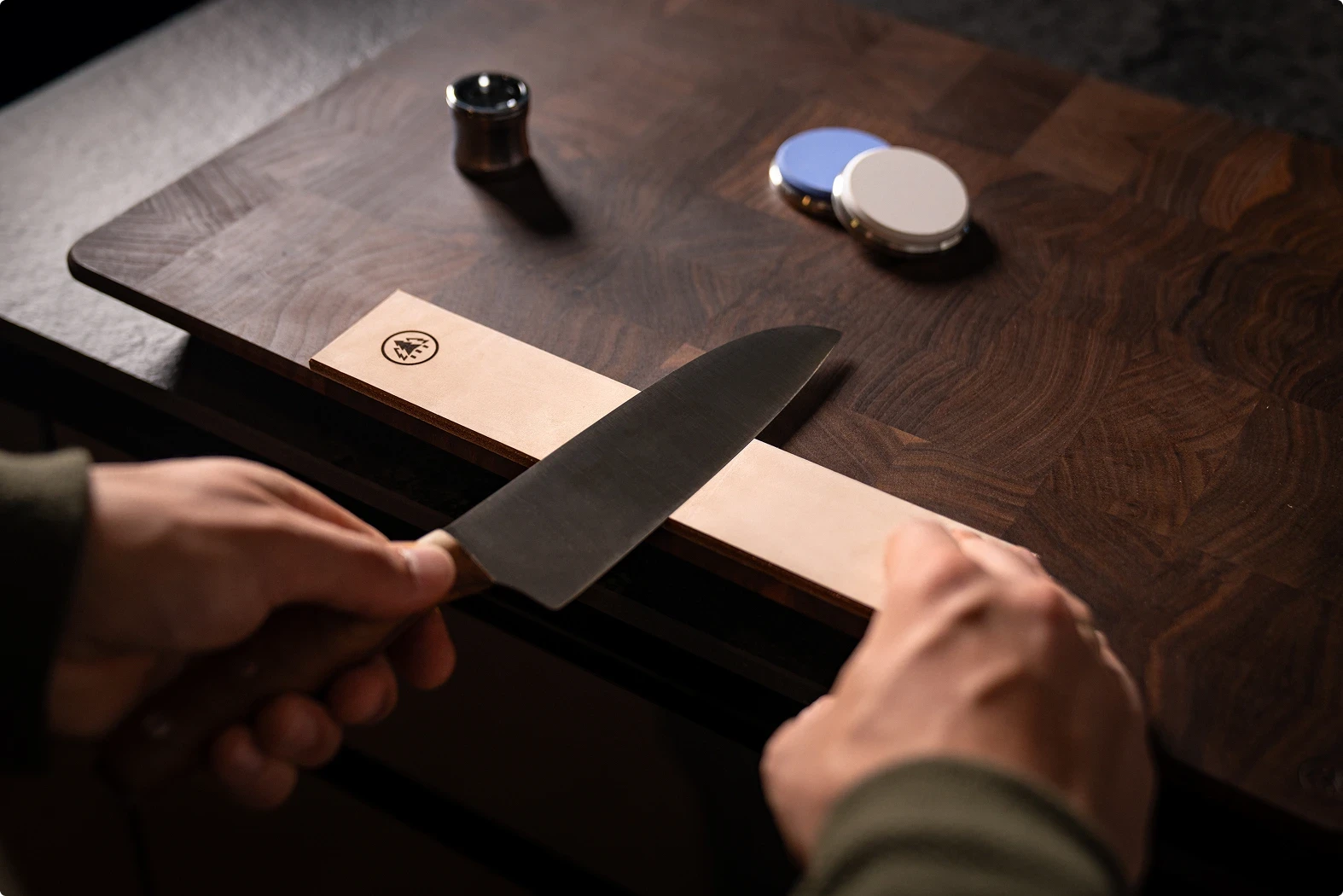
Ensure you strop both sides of the blade an equal number of times for a perfectly centered edge. Credit: HORL
Ensure you strop both sides of the blade an equal number of times for a perfectly centered edge. Credit: HORL
Step 4: Test the Sharpness
Step 4: Test the Sharpness
Test the blade on a piece of paper or slice a tomato or grape. A sharp knife should cut through it easily and effortlessly.
Test the blade on a piece of paper or slice a tomato or grape. A sharp knife should cut through it easily and effortlessly.
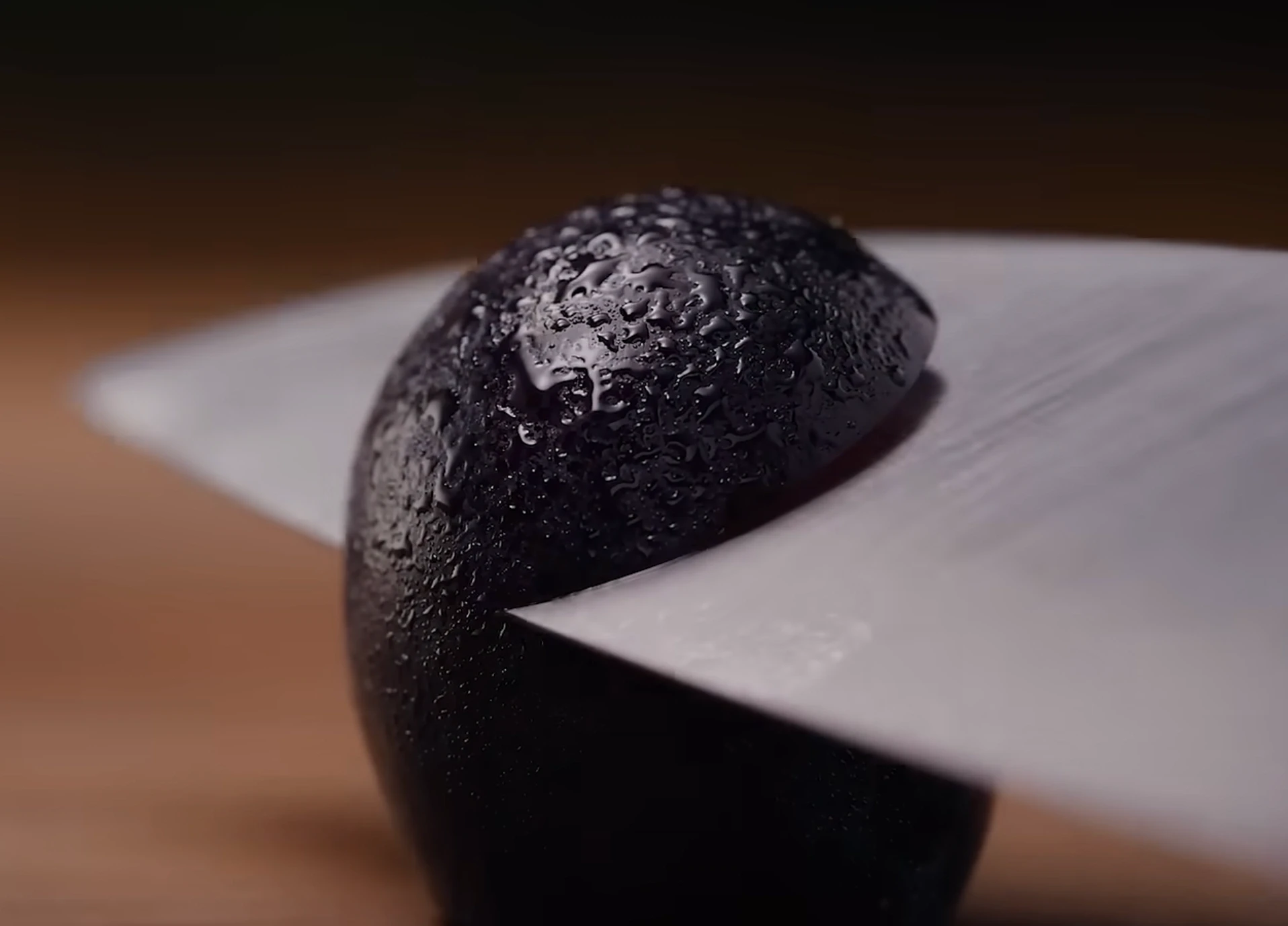
After stropping, the blade slices cleanly through the grape with ease. Credit: HORL
After stropping, the blade slices cleanly through the grape with ease. Credit: HORL
Common Mistakes to Avoid When Stropping Your Knife
Common Mistakes to Avoid When Stropping Your Knife
When using a leather strop, certain mistakes can damage the strop or its edges. These include:
Too Much Pressure: Light pressure is enough. Too much will damage the leather.
Wrong Angle: While having a precise angle isn’t critical, using an angle that’s too steep or flat can reduce the knife strop’s effectiveness.
Stropping in the Wrong Direction: Always pull the blade spine-first across the strop. Moving the edge forward (edge-leading) can cut into the leather strop, potentially ruining both the strop and the blade's edge.
Neglecting to Clean Your Strop: A dirty strop that’s filled with metal particles or stropping compound buildup can hurt your stropping later on. Always wipe it down regularly with a damp cloth or use an eraser to remove any sanding dust.
When using a leather strop, certain mistakes can damage the strop or its edges. These include:
Too Much Pressure: Light pressure is enough. Too much will damage the leather.
Wrong Angle: While having a precise angle isn’t critical, using an angle that’s too steep or flat can reduce the knife strop’s effectiveness.
Stropping in the Wrong Direction: Always pull the blade spine-first across the strop. Moving the edge forward (edge-leading) can cut into the leather strop, potentially ruining both the strop and the blade's edge.
Neglecting to Clean Your Strop: A dirty strop that’s filled with metal particles or stropping compound buildup can hurt your stropping later on. Always wipe it down regularly with a damp cloth or use an eraser to remove any sanding dust.
FAQs About Using Leather Strops
FAQs About Using Leather Strops
Now that we’ve covered the basics of leather strops, let’s dive into some of the most common questions users have. From proper techniques to understanding how often to strop, these FAQs will help you get the most out of your sharpening routine and keep your blades performing at their best.
Now that we’ve covered the basics of leather strops, let’s dive into some of the most common questions users have. From proper techniques to understanding how often to strop, these FAQs will help you get the most out of your sharpening routine and keep your blades performing at their best.
How often should I strop my knives?
How often should I strop my knives?
Unlike honing steels, which can be used between sharpenings to realign the edge, a leather strop is used only after sharpening to clean and refine the edge. So instead of stropping daily or weekly based on knife use, simply strop your knife immediately after sharpening. This helps make sure you have a clean, precise edge and helps you achieve true sharpness.
Unlike honing steels, which can be used between sharpenings to realign the edge, a leather strop is used only after sharpening to clean and refine the edge. So instead of stropping daily or weekly based on knife use, simply strop your knife immediately after sharpening. This helps make sure you have a clean, precise edge and helps you achieve true sharpness.
Can I use a strop on all types of knives?
Can I use a strop on all types of knives?
Unlike honing steels, which can be used between sharpenings to realign the edge, a leather strop is used only after sharpening to clean and refine the edge. So instead of stropping daily or weekly based on knife use, simply strop your knife immediately after sharpening. This helps make sure you have a clean, precise edge and helps you achieve true sharpness.
Unlike honing steels, which can be used between sharpenings to realign the edge, a leather strop is used only after sharpening to clean and refine the edge. So instead of stropping daily or weekly based on knife use, simply strop your knife immediately after sharpening. This helps make sure you have a clean, precise edge and helps you achieve true sharpness.
Can you sharpen a knife with just a leather strop?
Can you sharpen a knife with just a leather strop?
Stropping maintains the edge but doesn’t sharpen a dull knife. It’s best to use traditional sharpeners, such as the HORL®3 Cruise or HORL®3 Pro, and follow up with a leather strop to refine and clean your blades.
Stropping maintains the edge but doesn’t sharpen a dull knife. It’s best to use traditional sharpeners, such as the HORL®3 Cruise or HORL®3 Pro, and follow up with a leather strop to refine and clean your blades.
Do you have to use compound on a leather strop?
Do you have to use compound on a leather strop?
Stopping or buffing compounds enhance the process but aren’t strictly necessary. A plain strop can still improve sharpness.
Stopping or buffing compounds enhance the process but aren’t strictly necessary. A plain strop can still improve sharpness.
Why Choose the HORL® Leather Strop?
Why Choose the HORL® Leather Strop?
The HORL® Leather Strop delivers durability and performance, perfectly cleaning your knives. Plus, it’s affordable and built to last, making it a must-have addition to any sharpening toolkit.
Designed to be user-friendly, our leather strop stands out for these benefits:
Premium Vegetable-Tanned Leather: Durable, smooth, stropping perfection.
Compact and Versatile Design: Fits in any kitchen or workspace and is easy to fit into your knife maintenance routine.
Edge Refinement: Designed to work with the HORL® sharpening system, it helps achieve a professional finish.
The HORL® Leather Strop delivers durability and performance, perfectly cleaning your knives. Plus, it’s affordable and built to last, making it a must-have addition to any sharpening toolkit.
Designed to be user-friendly, our leather strop stands out for these benefits:
Premium Vegetable-Tanned Leather: Durable, smooth, stropping perfection.
Compact and Versatile Design: Fits in any kitchen or workspace and is easy to fit into your knife maintenance routine.
Edge Refinement: Designed to work with the HORL® sharpening system, it helps achieve a professional finish.
Find the Right Leather Strop From HORL®
Find the Right Leather Strop From HORL®
No matter your skill level, the HORL System can sharpen smooth blades to a sharp edge. Whether purchased individually or as part of the HORL Premium Set with additional whetstones, our high-quality leather strop is a reliable addition for properly cleaning the knife in the final step, helping to get the maximum performance out of your blades.
With the right tools and techniques, you can achieve sharp results every time, taking your cooking to the next level. Click here to shop HORL® today.
No matter your skill level, the HORL System can sharpen smooth blades to a sharp edge. Whether purchased individually or as part of the HORL Premium Set with additional whetstones, our high-quality leather strop is a reliable addition for properly cleaning the knife in the final step, helping to get the maximum performance out of your blades.
With the right tools and techniques, you can achieve sharp results every time, taking your cooking to the next level. Click here to shop HORL® today.
Il classico nella perfezione
Il classico nella perfezione
Il classico nella perfezione
Knife sharpening with everything that goes with it – with the HORL®3 and the right accessories, you’ll get the best out of your blades. From coarse to ultra-fine whetstones for even more sharpness, to the HORL® Leather for a professional finish, and stylish storage solutions – discover all the accessories for your perfect sharpening experience.